In summary:
- Choose a conservation group like Trout Unlimited or Ducks Unlimited based on your specific habitat interests—coldwater streams versus wetlands.
- Understand that your hunting license and gear purchases directly fund conservation through mechanisms like the Duck Stamp and the Pittman-Robertson Act.
- Leverage your skills beyond fieldwork by advocating for public land access and sound management policies with elected officials.
- Embrace a stewardship mindset by practicing ethical land use and mentoring the next generation of conservationists.
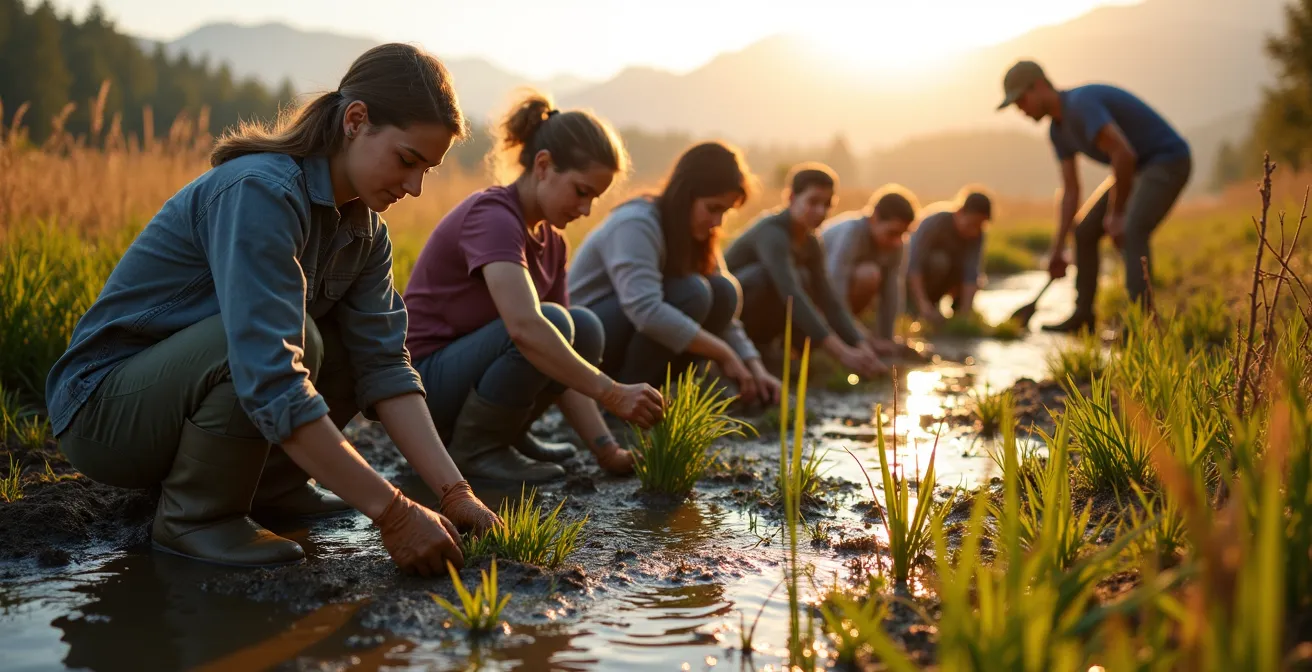
As a hunter or angler, you’ve likely felt it: that quiet concern watching a favorite stream warm up, a familiar duck marsh shrink, or a food plot yield less and less. You already contribute by purchasing licenses and gear, but there’s a deeper calling to do more—to get your hands dirty and leave these wild places better than you found them. Many people think giving back is limited to picking up trash or writing a check, but that barely scratches the surface of your potential impact.
The truth is, effective conservation isn’t a single action; it’s a dynamic ecosystem of participation. But what if the key wasn’t just to volunteer, but to strategically leverage your unique skills as a land user? This guide is built on that very idea. It’s about moving beyond passive support and becoming a full-spectrum conservationist. Your knowledge of the land, your understanding of wildlife, and your passion for the outdoors are powerful assets waiting to be deployed.
This article will walk you through the different ways you can contribute. We’ll explore how to choose the right organization for your interests, demystify where your conservation dollars go, and show you how to engage in everything from on-the-ground restoration and smart habitat management to policy advocacy and ethical education. It’s time to transform your passion into tangible action.
In the following sections, we will break down the essential components of this stewardship journey, providing you with the concrete knowledge and tools to make a real difference on your local public lands.
Summary: Beyond the License: How to Actively Restore Your Local Public Lands
- Trout Unlimited or Ducks Unlimited: Which Group Matches Your Interests?
- Where Does the Money from Duck Stamps Actually Go?
- Why Restoring Wetlands Reduces Flooding for Downstream Communities?
- How to Write to Your Representative About Public Land Access Issues?
- How to Plant Food Plots That Benefit Non-Game Species Too?
- Why Camping 200 Feet from Water Protects Riparian Zones?
- Pittman-Robertson Act: How Buying Ammo Pays for Bird Watching Trails?
- How to Teach Ethics to Young Hunters Before They Shoot Their First Round?
Trout Unlimited or Ducks Unlimited: Which Group Matches Your Interests?
Choosing where to invest your time and energy is the first crucial step in your stewardship journey. Two of the most prominent conservation organizations for hunters and anglers are Trout Unlimited (TU) and Ducks Unlimited (DU), but their focus and methods differ significantly. Understanding these differences ensures your efforts align with the habitats and species you care about most. It’s not just about joining a group; it’s about finding your place in the ecosystem of participation.
Trout Unlimited is dedicated to conserving, protecting, and restoring North America’s coldwater fisheries and their watersheds. If your passion lies in fly fishing for trout in mountain streams or protecting the pristine headwaters where big game roam, TU is likely your match. Their work often involves hands-on, in-stream projects like removing barriers to fish passage and process-based restoration. A prime example of this is seen in a partnership where the Bureau of Land Management and TU led a restoration effort in the Muddy Creek watershed, installing beaver dam analogs and improving a 14-mile stretch of stream habitat. This work directly benefits trout while also creating healthier riparian areas for mule deer, elk, and sage grouse.
On the other hand, Ducks Unlimited focuses on conserving, restoring, and managing wetlands and associated habitats for North America’s waterfowl. These habitats are vital not only for ducks and geese but also for countless other species. DU’s work is often concentrated along the four major flyways and involves creating and enhancing wetland impoundments and managing moist-soil areas. This work provides critical stopover points for migrating waterfowl and significantly improves local water quality and aquifer recharge. The following table, based on information from partners like the Bureau of Land Management, breaks down their core differences to help you decide.
| Aspect | Trout Unlimited | Ducks Unlimited |
|---|---|---|
| Primary Habitat Focus | Coldwater streams & watersheds | Wetlands & waterfowl habitat |
| Geographic Concentration | Mountainous/forested regions | Four major flyways, prairie & coastal |
| Restoration Methods | Process-based restoration, barrier removal | Wetland impoundments, moist-soil management |
| Volunteer Activities | In-stream work, macroinvertebrate sampling | Water control structures, food crop planting |
| Secondary Benefits | Riparian habitat for songbirds & big game | Aquifer recharge, downstream water quality |
Ultimately, the choice depends on your personal connection to the landscape. Do you find yourself drawn to the sound of a rushing river or the sight of waterfowl descending on a misty marsh? Both organizations offer incredible opportunities for strategic stewardship, allowing you to directly contribute to the health of the ecosystems you love.
Where Does the Money from Duck Stamps Actually Go?
Every time you purchase a Federal Duck Stamp, you’re doing more than just gaining the privilege to hunt migratory waterfowl. You’re making a direct investment in habitat conservation. But it’s natural to wonder: where does that money actually go, and how does it translate into tangible results on the ground? Understanding this funding cycle is key to appreciating your role in the larger conservation machine. It’s a powerful example of how sportsmen and women are the primary funders of wildlife management in North America.
The process is remarkably efficient: 98 cents of every dollar generated by the sale of Duck Stamps goes directly to the Migratory Bird Conservation Fund. This fund is used by the U.S. Fish and Wildlife Service to purchase or lease wetland and grassland habitats for the National Wildlife Refuge System. These protected lands provide critical breeding, resting, and wintering areas for waterfowl and a multitude of other wildlife, from songbirds to big game. They also offer incredible recreational opportunities for everyone, including bird watchers, hikers, and photographers.
This funding is often amplified by other federal programs. For instance, the Department of the Interior recently announced more than $161 million in funding from the Inflation Reduction Act for ecosystem restoration across 21 different landscapes. This money leverages existing funds from the Bipartisan Infrastructure Law and is often matched by state agencies and partner groups like DU, effectively multiplying the impact of every dollar you contribute. The flow of these funds is a clear, multi-step process:
- Federal agencies receive allocations from large-scale programs like the Inflation Reduction Act.
- They identify priority restoration landscapes based on ecological need and community importance.
- Funds are then deployed to specific projects across multiple states and ecosystems.
- Local partnerships are formed with state, tribal, and community organizations to execute the work.
- Restoration begins, improving everything from sagebrush steppe to wetland meadows.
So, that small stamp in your wallet is part of a much larger financial engine driving landscape-scale conservation. It’s a testament to the idea that small, individual contributions, when pooled together, create a massive force for good, securing habitat for generations to come. Your purchase is a direct vote for healthy wetlands and robust wildlife populations.
Why Restoring Wetlands Reduces Flooding for Downstream Communities?
When we talk about wetland restoration, the immediate benefits to ducks, geese, and other wildlife are obvious. But the impact of this work extends far beyond the marsh itself, providing crucial services to human communities, especially when it comes to flood mitigation. Healthy wetlands act as nature’s sponges, a form of green infrastructure that is often more effective and less expensive than concrete walls and levees. Understanding this connection elevates your restoration work from a hobbyist’s pursuit to a vital community service.
Imagine a heavy rainstorm over a watershed. In a landscape with drained or degraded wetlands, water rushes off hard surfaces, into ditches, and quickly swells rivers and streams, leading to downstream flooding. Now, picture that same storm over a landscape with healthy, restored wetlands. These areas capture vast amounts of rainwater and runoff, holding it and releasing it slowly over days or weeks. This process, known as hydrologic attenuation, dramatically reduces peak flood levels, protecting homes, businesses, and agricultural land downstream.
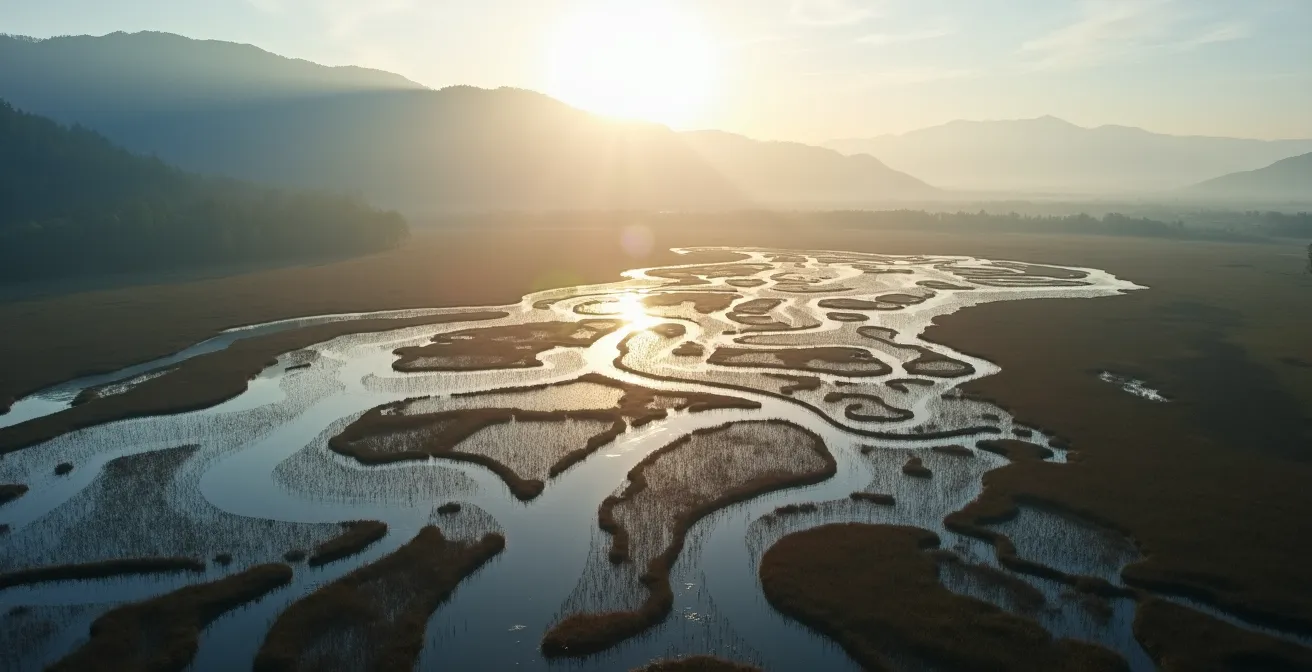
As the image above illustrates, the complex network of channels, pools, and dense vegetation in a wetland slows water down, allowing it to seep into the ground and recharge aquifers. This not only prevents floods but also improves water quality by filtering out pollutants and sediment. Federal land managers are increasingly recognizing this value. For example, the Bureau of Land Management’s proposed Public Lands Rule explicitly directs managers to identify lands for habitat restoration, which, according to their plan, includes restoring streambanks and implementing adaptive management strategies to enhance climate resilience and flood control. Furthermore, this work creates economic benefits; studies from agencies like the U.S. Forest Service show that restoration activities generate anywhere from 12 to 28 jobs per million dollars invested.
So, when you volunteer to help restore a wetland, you’re not just building a duck pond. You are rebuilding a critical piece of your community’s natural defense against extreme weather. You are helping to ensure clean drinking water, safeguarding property, and creating a resilient landscape for both wildlife and people. This is skill leverage in action—applying your passion for the outdoors to solve real-world problems.
How to Write to Your Representative About Public Land Access Issues?
Getting your boots muddy on a restoration project is immensely satisfying, but some of the most important conservation battles are won with a pen—or a keyboard. Advocating for sound public land policy is a critical part of the stewardship ecosystem. As a hunter or angler, your voice carries unique weight with elected officials. You’re not just a concerned citizen; you’re an active user and an economic driver in your district. Writing an effective letter or email is a skill, and learning how to do it well is one of the most powerful ways you can protect the places you love.
The goal is to be clear, personal, and persuasive. Generic form letters are easily dismissed, but a thoughtful message based on personal experience and local impact is hard to ignore. Start by introducing yourself as a constituent and a public land user. Explain how a specific issue—whether it’s a proposed land sale, a new access road closure, or the need for increased conservation funding—directly affects you, your family, and your community. Connect the dots between healthy public lands and a thriving local economy by mentioning the revenue generated by outdoor recreation businesses, from local diners and gas stations to guide services and sporting goods stores.
Your message should be focused and contain a specific “ask.” Don’t just complain about a problem; propose a solution. Ask your representative to support or oppose a particular piece of legislation (cite the bill number if you can), to advocate for funding for a specific conservation program, or to host a local listening session on the issue. Providing a clear course of action makes it easier for them and their staff to respond substantively. The following checklist outlines the key components of an effective message.
Your Action Plan: Engaging Your Representative on Public Lands
- Share Your Story: Begin by explaining how public land access personally affects your recreation, traditions, and community life.
- Connect to the Economy: Detail how public lands support local tourism, outdoor businesses, and job creation in the district.
- Highlight Community Value: Emphasize the conservation importance, public health benefits of outdoor access, and educational opportunities these lands provide.
- Make a Clear Request: Specify the exact action you want them to take, such as supporting a specific bill, opposing a land transfer, or increasing funding.
- Establish Your Credibility: Write from your unique perspective as an active hunter, angler, or hiker to provide an authentic, on-the-ground expert viewpoint.
Remember, your experience in the field gives you a perspective that policy-makers in distant capitals often lack. By sharing your story and connecting it to the broader economic and social benefits of public lands, you become a powerful advocate for conservation. This is another vital role for the full-spectrum conservationist.
How to Plant Food Plots That Benefit Non-Game Species Too?
For many landowners and hunting lease managers, planting food plots is a cornerstone of wildlife management, primarily aimed at attracting and nourishing game species like deer and turkey. However, a modern, ethical approach to stewardship recognizes that these plots can be so much more. By thinking like an ecologist, you can design food plots that act as biodiversity hotspots, benefiting a wide array of non-game species, from songbirds and pollinators to small mammals and reptiles. This transforms a simple feeding station into a thriving, multi-functional habitat.
The key is to move beyond the monoculture mindset of planting just one type of crop, like clover or brassicas. True strategic stewardship involves creating diversity in both plant species and structure. Instead of clean, hard edges, allow plot borders to “go soft” with native shrubs like elderberry or crabapple, which provide both food (soft mast) and critical escape cover. Within the plot itself, consider intercropping. Planting strips of native warm-season grasses like switchgrass or bluestem alongside your clover provides year-round cover that benefits nesting turkeys, quail, and even fawns.
This approach directly supports the work of agencies like the BLM, which is tasked with managing habitat for over 3,000 species, not just the ones we hunt. Creating ecological food plots helps fulfill that broader mission on a local scale. Here are some practical ways to enhance your food plots for maximum biodiversity:
- Plant native wildflower borders around your plots to support essential pollinators like bees and butterflies, which in turn supports the entire food web.
- Leave a portion of your crops, such as corn or sunflowers, unharvested through the winter to provide a crucial food source when resources are scarce.
- Establish perennial soft-mast trees and shrubs like persimmons and wild plums for long-term, low-maintenance food production.
- Create a diverse vertical structure, from low ground cover to a mid-level shrub layer, to provide niches for different species to feed, nest, and hide.
By implementing these strategies, your food plot becomes more than just a place to hang a trail camera. It becomes a vibrant, functioning ecosystem that contributes to the overall health of your local environment. You’re not just feeding the deer; you’re building a resilient landscape that supports a rich tapestry of life, making you a true steward of all wildlife.
Why Camping 200 Feet from Water Protects Riparian Zones?
The “200-foot rule”—the guideline to camp at least 200 feet (or about 70 adult steps) from any river, stream, or lake—is a cornerstone of Leave No Trace ethics. For many, it can feel like an arbitrary inconvenience, especially when a pristine spot right on the water’s edge is calling. However, understanding the fragile science of riparian zones reveals why this simple act of discipline is one of the most critical things you can do to protect the health of an aquatic ecosystem. This isn’t just about politeness; it’s about preventing long-term ecological damage.
A riparian zone is that lush, vibrant strip of land bordering a body of water. It’s a unique and incredibly important transition area between the aquatic and terrestrial worlds. This narrow band of vegetation is the lifeblood of the waterway. Its root systems act like a net, holding the soil together and preventing erosion that would otherwise choke the stream with sediment, smothering fish eggs and aquatic insects. These plants also filter runoff from the surrounding landscape, trapping pollutants and excess nutrients before they can foul the water.
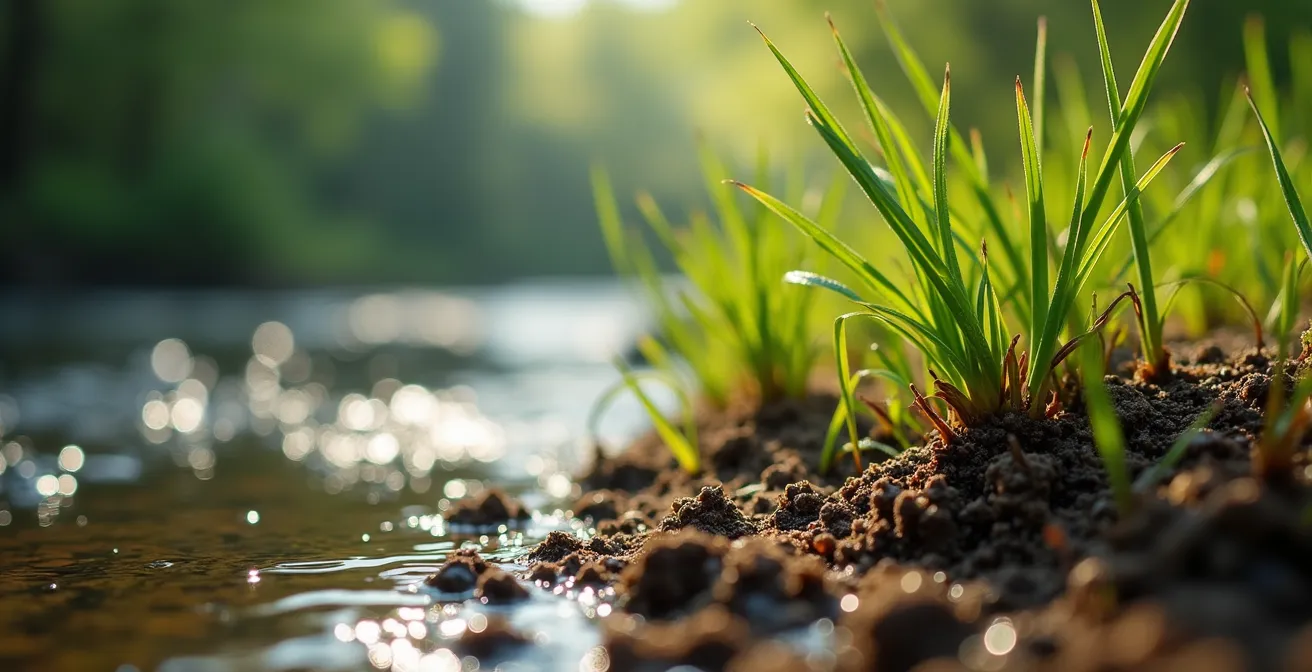
When you set up camp too close to the water, you inflict several types of damage. Your footsteps and tent footprint compact the soil, crushing delicate plant life and reducing the ground’s ability to absorb water. This concentrated foot traffic creates bare-earth paths that become conduits for erosion. Furthermore, everyday camp activities—washing dishes, brushing teeth, or even a small fuel spill from a camp stove—can introduce soap, food scraps, and chemicals directly into the water, harming fish and the insects they feed on. The 200-foot buffer gives the soil and vegetation a chance to act as a natural filter, breaking down these contaminants before they reach the stream.
By respecting this buffer, you are actively preserving the very things that make a streamside camp so appealing: clean, clear water, stable banks, and abundant wildlife. It’s a small sacrifice that pays huge dividends for the health of the entire watershed. This is a fundamental principle of ethical land use, demonstrating your commitment to leaving a place better—or at least no worse—than you found it.
Pittman-Robertson Act: How Buying Ammo Pays for Bird Watching Trails?
As a hunter, you’re part of one of the most successful conservation funding models in the world, often without even realizing it. The Federal Aid in Wildlife Restoration Act, commonly known as the Pittman-Robertson Act, is a prime example of how the sporting community directly funds the management and restoration of wildlife and their habitats for the benefit of all Americans. Every time you purchase a firearm, ammunition, or archery equipment, a portion of that sale is set aside for conservation.
Enacted in 1937, this landmark legislation established an excise tax—currently 11% on long guns, ammunition, and archery gear, and 10% on handguns—paid by manufacturers. This revenue is collected by the federal government and then distributed to state wildlife agencies. The amount each state receives is based on its land area and the number of licensed hunters. This creates a powerful cycle: more hunters mean more funding, which leads to better habitat and more hunting opportunities.
But here’s the crucial part that is often misunderstood: this money doesn’t just benefit game species. State wildlife agencies are responsible for managing *all* wildlife within their borders. Therefore, Pittman-Robertson funds are used for a vast array of projects that benefit everyone who enjoys the outdoors. This includes:
- Habitat Restoration: Projects that improve forests, grasslands, and wetlands benefit everything from elk and deer to songbirds and pollinators.
- Wildlife Research: Studies on non-game species, from bats to box turtles, are often funded by these dollars.
- Land Acquisition: The purchase of land for Wildlife Management Areas provides public access for hunters, hikers, and bird watchers alike.
- Public Facilities: The construction of boat ramps, shooting ranges, and wildlife viewing platforms are all permissible uses of these funds.
So, the next time you see a family enjoying a bird-watching trail or a hiker on a newly acquired piece of public land, know that your last box of shells or broadheads likely helped make that possible. The Pittman-Robertson Act is the ultimate proof of the “user-pays, public-benefits” principle and a cornerstone of the North American Model of Wildlife Conservation. It’s a legacy that every hunter should understand and be proud of.
Key Takeaways
- Your journey as a steward begins with a choice: align with a group like Trout Unlimited for coldwater or Ducks Unlimited for wetlands to match your passion.
- Your purchases of licenses and gear are not just fees; they are powerful investments that fund landscape-scale conservation through programs like the Duck Stamp and Pittman-Robertson Act.
- Effective stewardship extends beyond fieldwork. Using your voice to advocate for sound public land policies is a critical way to protect the habitats you cherish.
- The ultimate goal is to become a full-spectrum conservationist—one who restores habitat, practices ethical land use, understands policy, and actively mentors the next generation.
How to Teach Ethics to Young Hunters Before They Shoot Their First Round?
Introducing a young person to hunting is about much more than teaching them how to shoot safely. It’s about instilling a deep and abiding sense of ethical responsibility—a stewardship mindset that will guide every decision they make in the field. The most effective way to do this is to teach them that hunting is not the starting point, but rather the culmination of a long journey of learning and respect for the wild. Ethics are taught not in a single lecture, but through a gradual process of engagement and hands-on experience.
Case Study: Fostering Stewardship in Youth
The BLM’s collaboration with youth conservation corps demonstrates the power of this approach. By engaging young people in hands-on stewardship projects, they gain a tangible connection to natural resources. The experience of restoring a streambank or removing invasive species often sparks lifelong values of service and environmental responsibility, establishing a strong ethical foundation long before they ever consider pulling a trigger. This work proves that starting with conservation builds a deeper respect for the entire ecosystem.
A powerful way to structure this education is through a “Hunter’s Journey” framework, where shooting and harvesting are the final steps, not the first. This approach ensures a young hunter understands the “why” before they learn the “how.” It builds a foundation of respect that makes the act of taking an animal a profound and meaningful responsibility, not just a sport. The journey can be broken down into several distinct stages:
- The Ecological Steward: Begin with habitat. Involve them in restoration projects. Let them plant trees, build brush piles, or help restore a streambank. Their first connection to wildlife should be as a caretaker.
- The Conservation Understander: Teach them the basics of wildlife management, the role of predators and prey, and how ecosystems function. Help them understand that regulated hunting is a tool for maintaining healthy wildlife populations.
- The Respectful Pursuer: Study the animals. Learn their behaviors, their tracks, and their signs. Teach the principles of fair chase and the importance of giving the animal a chance.
- The Ethical Decision-Maker: Use scenarios to discuss difficult choices. What do you do if an animal is on a property line? Is that shot too far? This builds critical thinking skills.
- The Humane Harvester: Only now do you focus on marksmanship. Emphasize mastering shot placement for a quick, ethical kill. This is a solemn responsibility.
- The Grateful Provider: Teach them to properly field dress the animal and instill a commitment to using as much of it as possible. This closes the loop and honors the life that was taken.
By following this path, you’re not just creating a hunter; you’re cultivating a full-spectrum conservationist. You are passing on a legacy of respect and responsibility that will ensure the future of our wildlife and our hunting traditions for generations to come.
Frequently Asked Questions on Participating in Habitat Restoration
How can citizens influence public land management decisions beyond writing letters?
Citizens can participate in National Public Lands Day events, join local conservation groups, attend BLM listening sessions, and submit comments during public comment periods for land management plans.
What makes a compelling argument for public land protection?
Combining personal experience with economic data about outdoor recreation’s local impact, while demonstrating knowledge of specific land management issues and proposing actionable solutions.
When is the best time to contact representatives about land issues?
During public comment periods for land management plans, before key committee votes on relevant legislation, and when local land use conflicts arise that need policy solutions.
How do excise taxes on hunting and fishing equipment benefit non-hunters?
These taxes fund state wildlife agencies that manage all wildlife species, not just game animals, and support public land acquisition that provides hiking trails, bird watching areas, and other non-consumptive recreation opportunities.
What types of projects receive Pittman-Robertson Act funding?
Projects include habitat restoration, wildlife research, land acquisition for public access, construction of wildlife viewing platforms, and environmental education programs that benefit all citizens.
Can non-hunters influence how these conservation funds are spent?
Yes, through participating in state wildlife action planning processes, attending public meetings, and volunteering with state wildlife agencies to help shape conservation priorities.