Blog
Every successful day in the field—whether tracking game through uneven terrain, casting lines at dawn, or setting up for that perfect shot—depends on two often-overlooked foundations: the boots on your feet and the fundamentals of marksmanship. These elements don’t just influence comfort or accuracy in isolation; they directly impact your safety, endurance, and overall enjoyment of outdoor pursuits.
Many enthusiasts invest heavily in firearms, rods, and tactical gear while underestimating how proper footwear can prevent debilitating joint pain or how mastering eye dominance transforms shooting performance. This resource bridges those gaps by exploring the science behind impact absorption, the physics of breathable waterproofing, and the precise techniques that separate inconsistent shooters from confident marksmen. Whether you’re planning your first hunting season or refining skills honed over decades, understanding these principles will fundamentally change how you prepare for and experience time outdoors.
The following sections break down complex topics into practical knowledge you can apply immediately—from diagnosing boot wear patterns to correcting posture errors without firing a single round.
Why Footwear Technology Matters in the Field
The human foot absorbs tremendous force during outdoor activities, particularly when carrying hunting packs or navigating rocky stream beds. Poor footwear choices create a cascade of problems that extend far beyond simple blisters, affecting everything from knee stability to lower back health over time.
Joint Health and Fatigue Prevention
When boots lack proper support, each step sends shockwaves through your skeletal system. Think of your joints as precision hinges—they’re engineered for specific movement patterns, but repetitive impacts from inadequate cushioning force them to compensate in unnatural ways. Hunters covering five to ten miles daily in poorly designed footwear often develop chronic issues that could have been prevented.
Modern footwear technology addresses this through strategically placed support zones. Effective designs incorporate:
- Midsole geometry that matches natural foot contours
- Graduated cushioning that responds to varying load distributions
- Heel counters that prevent excessive pronation during descent
- Toe box architecture allowing natural splay under weight
Impact Absorption and Cushioning Systems
Not all cushioning performs equally under field conditions. Lightweight foam compounds excel for short day hikes but compress permanently when subjected to 70-pound pack loads over extended trips. Conversely, ultra-dense materials provide durability but sacrifice ground feedback crucial for navigating unstable terrain.
The key lies in matching cushioning technology to your specific activity profile. Anglers standing in cold water for hours need different shock management than upland hunters covering varied topography. Quality designs often layer multiple foam densities, placing softer compounds where initial impact occurs and firmer materials where structural support matters most.
Custom Fit and Arch Support
Arch height varies dramatically among individuals, yet many outdoor enthusiasts default to generic insoles. Your arch functions as a natural suspension system, and when footwear doesn’t support its specific geometry, surrounding muscles fatigue rapidly as they work overtime to compensate.
Proper arch support isn’t about maximum cushioning—it’s about precise alignment. High-arched feet require different contouring than flat feet, and carrying weight changes support needs entirely. Investing time to customize fit through aftermarket insoles or heat-moldable footbeds pays dividends in extended comfort and reduced injury risk during multi-day excursions.
Mastering Waterproofing and Breathability
The waterproofing paradox frustrates countless outdoor enthusiasts: boots that keep external moisture out often trap internal perspiration, leaving feet just as wet. Understanding the physics behind moisture management helps you make informed choices rather than relying on marketing claims.
The Physics of Moisture Management
Waterproof membranes work through microscopic pores—small enough to block liquid water molecules but large enough to allow water vapor (sweat) to escape. This process depends on vapor pressure differentials: moisture only moves from high-concentration areas (inside your boot) to low-concentration areas (outside) when conditions permit.
The system fails when external humidity approaches saturation or when temperatures drop significantly. In these scenarios, sweat condenses against the membrane’s interior surface faster than it can escape, creating the damp environment you sought to avoid. Recognizing these limitations helps set realistic expectations and informs decisions about when non-waterproof options actually perform better.
Membrane Technology and Maintenance
Waterproof membranes degrade over time through contamination, abrasion, and chemical breakdown. Body oils, dirt particles, and detergent residues clog those microscopic pores, progressively reducing breathability until boots become sweat chambers. Many hunters discard perfectly functional footwear simply because they’ve never learned proper restoration techniques.
Maintaining membrane function requires:
- Regular cleaning with pH-neutral solutions that don’t leave residues
- Periodic reapplication of durable water repellent (DWR) treatments to exterior fabrics
- Proper drying techniques that avoid heat damage to bonded seams
- Storage in climate-controlled environments away from petroleum products
When to Choose Non-Waterproof Options
Counterintuitively, waterproof boots aren’t always optimal. In hot, dry environments or during high-output activities, non-waterproof designs that prioritize breathability often keep feet drier overall. Water that does enter through fabric uppers also drains and dries faster than moisture trapped inside membrane systems.
Consider skipping waterproof membranes when operating in arid climates, during warm-weather pursuits where stream crossings dry quickly, or on hunts where weight savings outweigh occasional dampness. The decision hinges on honest assessment of conditions rather than defaulting to “waterproof equals better.”
Building Core Shooting Skills
Marksmanship separates ethical hunters from those who wound game, yet many shooters neglect fundamentals in favor of equipment upgrades. No optic or ammunition can compensate for poor gun fit, unaddressed eye dominance issues, or inconsistent posture.
Gun Fit and Eye Dominance
A shotgun or rifle that doesn’t fit your physiology forces compromises that destroy accuracy. When length of pull doesn’t match arm length, you either overreach (causing fatigue and inconsistent cheek weld) or scrunch awkwardly (reducing recoil management). Similarly, eye dominance—the eye your brain prioritizes for aiming—often doesn’t match hand dominance.
Cross-dominance creates particular challenges. Right-handed shooters with left-dominant eyes must either train their non-dominant eye, adjust shooting stance, or modify firearms with offset stocks. Identifying dominance takes seconds using simple tests, yet addressing mismatches dramatically improves hit probability, especially on moving targets.
Optics Setup and Alignment
Improperly mounted scopes account for countless missed shots. Eye relief—the distance between your eye and the optic’s rear lens—must accommodate recoil without causing scope strikes while providing full field of view. Mounting rings at incorrect heights forces unnatural head positioning that fatigues neck muscles and slows target acquisition.
Reticle alignment matters equally. Even minute canting (tilting the rifle off vertical) throws bullet impact significantly at extended ranges. Quality shooters verify level alignment during mounting and recheck periodically, as rings can shift under recoil over hundreds of rounds.
Posture and Dry Fire Practice
Consistent shooting posture creates repeatable results. Common errors include:
- Leaning backward to counterbalance perceived recoil
- Gripping fore-ends with excessive tension that introduces tremor
- Failing to establish consistent cheek pressure on the stock
- Neglecting to pre-load the rifle into the shoulder pocket
Correcting these issues requires no ammunition whatsoever. Dry fire practice—repeatedly mounting, aiming, and triggering unloaded firearms—builds muscle memory far more economically than live fire. Modern snap caps protect firing pins while allowing hundreds of repetitions that ingrain proper technique. Fifteen minutes of focused dry fire daily produces more improvement than monthly range trips plagued by inconsistent fundamentals.
The intersection of proper equipment and refined technique defines success in outdoor pursuits. Boots that support your unique biomechanics enable you to reach remote locations without sacrificing next-day mobility, while mastered shooting fundamentals ensure ethical, confident performance when opportunities arise. These aren’t peripheral considerations—they’re foundational elements that separate rewarding outdoor experiences from frustrating ones marked by discomfort and missed chances.

Shave 0.5s Off Your Target Acquisition: A Biomechanical Guide for Hunters
The key to gaining that critical half-second on moving game isn’t in your gear; it’s in re-engineering your body as an integrated shooting system. Your gun’s fit (Length of Pull) dictates your mount speed more than any other factor. Training…
Read more
The Breathability Paradox: Why Your Waterproof Boots Fail and How to Fix It
The performance of a waterproof-breathable boot is not dictated by the membrane’s brand, but by the user’s management of the entire footwear system. Internal moisture (sweat) is often a bigger problem than external water, as even the best membranes have…
Read more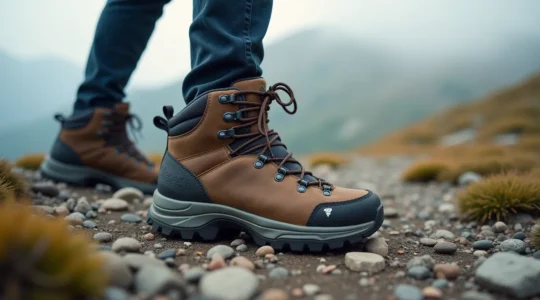
Beyond the Hype: How Does Ergonomic Cushioning Really Prevent Joint Pain on Long Treks?
The biggest myth in long-distance hiking is that maximum cushioning equals maximum joint protection; for serious treks, the opposite is often true. Extremely soft, thick midsoles can increase ankle instability and create shearing forces that lead to blisters, especially under…
Read more