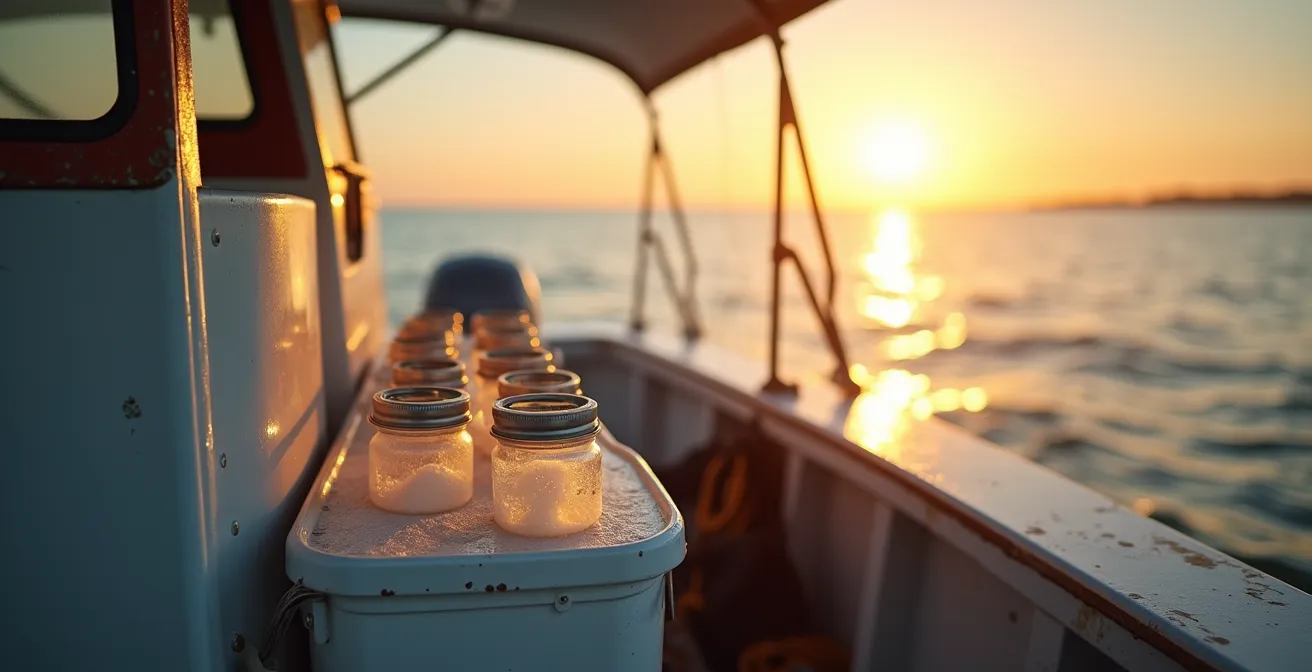
The key to keeping live bait vigorous is not a collection of random tips, but the mastery of three core biological principles: thermoregulation, oxygenation, and stress mitigation.
- Sudden temperature changes (thermal shock) are more lethal than warm water itself; gradual cooling is essential.
- Consistent oxygen saturation from a battery aerator is vastly more reliable for bait health than the intense, short bursts from oxygen tablets.
Recommendation: Shift your focus from just “keeping bait alive” to creating a stable, low-stress micro-ecosystem in your bait bucket that mimics their natural habitat.
There’s no greater frustration for an angler than reaching a prime fishing spot, opening the bait bucket, and finding a collection of lifeless, floating minnows. The heat of the day seems to suck the energy right out of them, turning expensive, lively bait into useless chum before the first cast. Many anglers follow the conventional wisdom: toss in some ice, use an aerator, and hope for the best. But these are often just tactical guesses that can do more harm than good, leading to the same disappointing outcome trip after trip.
The problem is that these common “fixes” often ignore the fundamental biology of the creatures we’re trying to keep healthy. Baitfish like shiners and minnows are delicate organisms, finely tuned to their environment. Subjecting them to drastic changes is a recipe for disaster. But what if the solution wasn’t about fighting the heat, but about understanding and managing the bait’s environment with scientific precision? What if the real key wasn’t in the *what*, but in the *why* behind their survival?
This guide moves beyond generic advice to provide a biologist’s perspective on bait preservation. We will deconstruct the three pillars of bait vitality: thermoregulation (managing temperature), oxygen saturation (ensuring they can breathe), and stress mitigation (minimizing physiological harm). By mastering these principles, you can transform your bait bucket from a death trap into a thriving temporary habitat, ensuring your bait remains energetic, attractive, and ready for action for six hours or more, even on the hottest days.
To help you master these techniques, this article breaks down the science into practical, actionable steps. We will explore everything from proper water cooling and oxygenation to hooking methods and the ecological responsibility that comes with using live bait.
Summary: The Biologist’s Guide to Ultimate Bait Vitality
- Why Adding Ice Directly to the Bucket Kills Minnows via Thermal Shock?
- Lip Hook vs Tail Hook: Which Method Allows the Minnow to Swim Naturally?
- Shiners or Nightcrawlers: Which Works Best in Muddy Spring Water?
- Battery Aerator vs Oxygen Tablets: Which Is More Reliable for Day Trips?
- Why Dumping Leftover Bait into the Lake Violates Ecosystem Laws?
- Circle Hook vs J-Hook: Which Reduces Gut-Hooking Mortality Rates?
- Why Fish Suspend at the Thermocline During the Heat of Summer?
- How to Predict Feeding Windows Based on Solunar Tables?
Why Adding Ice Directly to the Bucket Kills Minnows via Thermal Shock?
The most common instinct on a hot day is to dump ice into the bait bucket. While well-intentioned, this is often the fastest way to kill your bait. The issue isn’t the cold itself, but the rapid, uncontrolled temperature drop it causes. This phenomenon, known as thermal shock, is a massive physiological stressor for fish. Their metabolic systems are not designed to handle such abrupt changes. In fact, research shows that sudden temperature changes cause a 20-30% mortality rate within the first hour alone. The goal is not to make the water ice-cold, but to keep it cool and stable.
A much safer and more effective method is to manage thermoregulation gradually. The ideal temperature differential between your bait tank and the fishing water should be within 5-10 degrees Fahrenheit. This prevents shock when you finally introduce the bait to the lake. Instead of loose ice, use frozen water bottles. This cools the water slowly and avoids introducing chlorinated tap water, which can damage a minnow’s gills. For best results, start with cool water (around 40-42°F) from a pre-chilled container and use the frozen bottles to maintain that temperature throughout the day.
To achieve this gradual reduction without shocking the system, follow a careful process. Add small amounts of colder, dechlorinated water every five minutes over a period of 20-30 minutes. This allows the minnows to acclimate slowly. Remember, stability is more important than achieving the lowest possible temperature. A stable 50°F is far better for bait health than a temperature that swings wildly from 60°F down to 35°F and back up.
Lip Hook vs Tail Hook: Which Method Allows the Minnow to Swim Naturally?
Once you have a bucket of healthy, energetic bait, the next step is presenting it in a way that looks natural and enticing to predators. The way you hook your minnow has a dramatic impact on its swimming pattern, fatigue level, and ultimately, its effectiveness. There is no single “best” way; the right choice depends entirely on your fishing technique. The two most common methods, lip hooking and tail hooking, create distinctly different actions in the water.
Lip hooking, where the hook passes through both the upper and lower lips, allows the minnow to swim with a natural forward momentum. This is ideal for casting and retrieving or for slow trolling, as it keeps the bait oriented correctly in the current. However, it can create significant hydrodynamic drag, causing the bait to tire more quickly. In contrast, tail hooking, where the hook is placed just forward of the tail, creates a fleeing, erratic action. This is highly effective for vertical jigging or fishing under a float, as the minnow can swim more freely on a stationary line, sending out distress signals that attract predators.
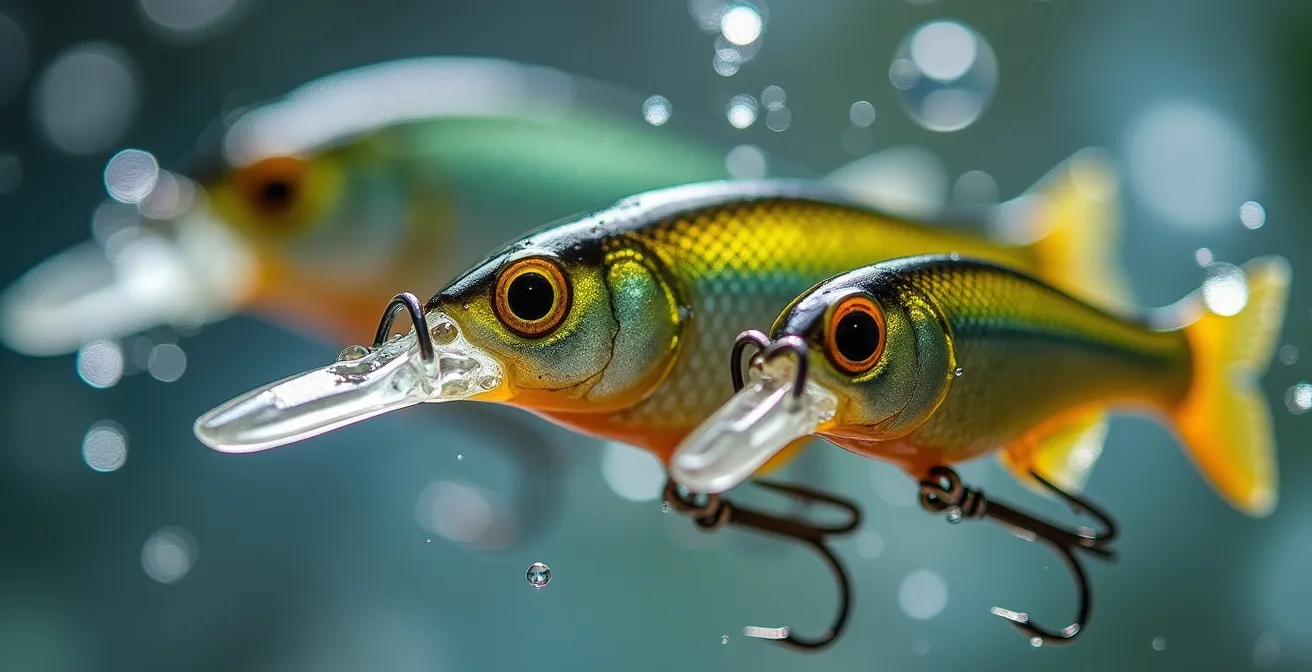
As the visual guide above demonstrates, a third option, dorsal hooking, forces the bait into a downward, panicked motion, making it perfect for targeting predators suspended in the water column. The following table, based on an advanced guide to live baiting, breaks down the key differences to help you make a strategic choice.
| Hook Method | Swimming Pattern | Best Application | Fatigue Level |
|---|---|---|---|
| Lip Hook | Forward momentum, cruising motion | Casting/retrieving, slow trolling | Higher stress from hydrodynamic drag |
| Tail Hook | Reverse momentum, fleeing action | Vertical jigging, under float | More freedom on stationary line |
| Dorsal Hook | Downward panicked motion | Targeting suspended predators | Moderate stress level |
Shiners or Nightcrawlers: Which Works Best in Muddy Spring Water?
The effectiveness of your bait isn’t just about its liveliness; it’s about how well predators can detect it. In low-visibility conditions like muddy spring water, the primary sense fish use for hunting shifts from sight to vibration and scent detection. This is where understanding the unique properties of different baits becomes a strategic advantage. The choice between a vibrant shiner and a scented nightcrawler depends on water temperature and your fishing style.
In turbid water, a fish’s lateral line system is its greatest asset. This sensory organ detects minute pressure changes and vibrations, allowing fish to “feel” the presence of prey from a distance. Energetic shiners excel in this environment by creating a distinct “thump” and vibration as they struggle. As water temperatures warm up, their increased activity makes them an irresistible target for predators relying on vibration. For active fishing methods like casting or slow trolling, the shiner’s movement provides a powerful, long-range signal.
However, in colder muddy water, a nightcrawler may have the edge. As Stanley Sevin, a professional at Bait House Seafood, explains in his guidance for Louisiana Sportsman:
In cold, muddy spring water, a crawler’s scent disperses more slowly, making it a better choice for slow, stationary fishing. As it warms, a shiner’s increased activity and vibration become more effective.
– Stanley Sevin, Bait House Seafood Professional Guide
The slow dispersal of a crawler’s scent creates a concentrated trail for fish to follow, making it ideal for bottom fishing or stationary presentations. Some experienced anglers even use a hybrid approach, tipping a jig with both a piece of nightcrawler and a live minnow to appeal to both scent and vibration senses simultaneously.
Battery Aerator vs Oxygen Tablets: Which Is More Reliable for Day Trips?
Proper thermoregulation is pointless if your bait suffocates. As water warms, its ability to hold dissolved oxygen plummets, while the bait’s metabolism and oxygen demand skyrocket. This creates a dangerous deficit that requires active oxygenation. The two most common tools for this job are battery-powered aerators and chemical oxygen tablets, but they are not created equal in terms of reliability and effectiveness for a full day of fishing.
Oxygen tablets work by creating a rapid, intense chemical reaction that fizzes and releases oxygen into the water. While they can provide a quick boost in an emergency, their effect is short-lived and uncontrolled. The initial burst can even be stressful for the bait, and once the tablet dissolves, oxygen levels begin to drop again. They are a decent backup but are not a reliable primary solution for maintaining stable oxygen saturation over several hours.
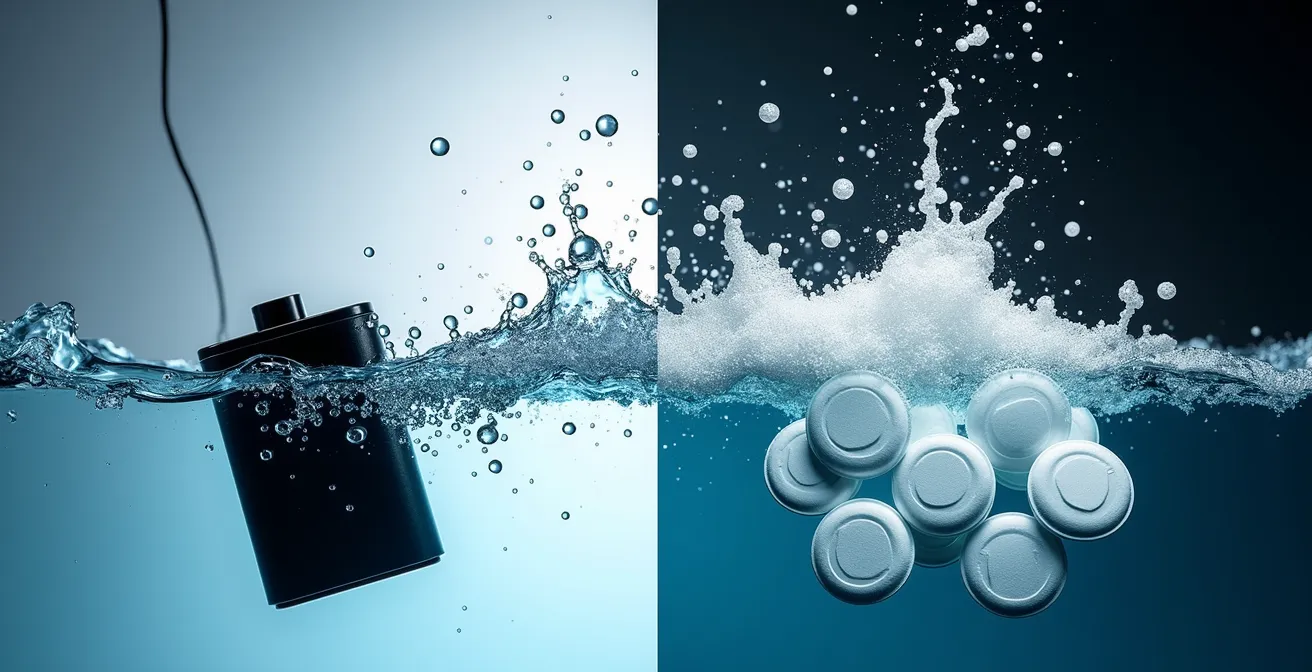
A battery-powered aerator, by contrast, provides a steady, continuous stream of air bubbles. This constant agitation of the water’s surface facilitates gas exchange, ensuring a stable and consistent level of dissolved oxygen. This mimics the natural process of aeration in streams and rivers. For day-long trips, their reliability is unmatched, as modern lithium battery aerators can provide up to 36 hours of continuous operation on a single set of batteries. They create a far more stable and less stressful environment, which is the cornerstone of keeping bait energetic and healthy.
Why Dumping Leftover Bait into the Lake Violates Ecosystem Laws?
At the end of a long fishing day, it can be tempting to “set free” your leftover minnows by dumping them into the lake. While this may seem like a kind act, it is one of the most ecologically irresponsible things an angler can do. This practice is illegal in many jurisdictions for several critical reasons, all of which are aimed at protecting the ecosystem integrity of our natural waterways. Releasing baitfish can introduce invasive species, spread deadly diseases, and weaken the local gene pool.
Many baitfish are not native to the waters they are used in. The rusty crayfish, for example, was commonly sold as bait and has since devastated native plant and fish populations across North America after being released. Furthermore, bait shop minnows are often raised in dense aquaculture farms, which can be breeding grounds for pathogens like Viral Hemorrhagic Septicemia (VHS). While the farmed bait may be resistant, these diseases can be lethal to wild fish populations that have no natural immunity.
Finally, even if the bait species is native, introducing farmed genetic strains can lead to hybridization with wild populations. This dilutes the local gene pool, which has evolved over millennia to be perfectly adapted to that specific environment. This genetic weakening can reduce the resilience of native fish stocks to disease and environmental changes for generations. The only responsible action is to dispose of unused bait properly.
Your Action Plan: Responsible Angler’s Code of Conduct
- Transport unused live bait home in your aerated container for your next trip.
- Dispose of all dead or unwanted bait in designated trash receptacles, never in the water or on the shore.
- Consider sharing your healthy, leftover live bait with other anglers at the dock or boat ramp.
- Always check local and state regulations for specific rules on bait transport and disposal in your area.
- Whenever possible, use bait that was sourced from the same body of water you are fishing in to prevent cross-contamination.
Circle Hook vs J-Hook: Which Reduces Gut-Hooking Mortality Rates?
The principles of bait health extend beyond just keeping them alive for the cast; they connect directly to the ethics of catch-and-release fishing. Using a strong, lively minnow increases your chances of a solid hookup. However, the type of hook you choose determines where the fish gets hooked, which has a massive impact on its post-release survival. The debate between traditional J-hooks and modern circle hooks is central to this issue, with science providing a clear winner for conservation.
A J-hook has a classic shape with a point that runs parallel to the shank. When a fish swallows the bait, a hard hookset is required, which often results in the hook lodging deep in the fish’s throat or stomach—a “gut-hook.” This can cause fatal internal injuries, and even if the fish is released, its chances of survival are significantly reduced. It is an effective hook for keeping fish on the line but is devastating for catch-and-release practices.
A circle hook, on the other hand, is designed with the point turned perpendicularly back toward the shank. When a fish takes the bait and swims away, the unique shape of the hook causes it to slide out of the throat and catch in the corner of the fish’s jaw. No hard hookset is needed; a slow, steady pressure is enough. This technique dramatically reduces gut-hooking, and as a result, post-release mortality. In fact, survival rates increase from 60% to over 90% when switching to circle hooks. This simple gear change is one of the most impactful choices an angler can make for the future of the fishery.
Why Fish Suspend at the Thermocline During the Heat of Summer?
Keeping your bait alive is only half the battle; you still need to find the fish. During the heat of summer, as surface temperatures soar, many game fish seem to vanish. They haven’t left the lake; they’ve simply moved to their comfort zone, a specific depth layer known as the thermocline. Understanding this feature of lake stratification is the key to locating and catching fish during the hottest months.
In summer, lakes stratify into three distinct layers. The top layer, or epilimnion, is the warm, sunlit water at the surface. The bottom layer, the hypolimnion, is the deep, cold, and often oxygen-poor water. Sandwiched between them is the thermocline, a relatively thin band of water where the temperature drops rapidly. This layer offers the perfect compromise for predator fish: it’s cool enough to be comfortable but still contains enough dissolved oxygen to support an active metabolism. It also acts as a magnet for the baitfish they prey on.
Your fish finder is the best tool for locating this crucial zone. The thermocline often appears as a distinct band on the screen, frequently cluttered with the marks of suspended baitfish and the larger arches of predators lurking nearby. Once you’ve identified this depth, you can position your healthy, live bait at or just above it. Presenting bait too far below the thermocline is often useless, as that deeper water may be an anoxic “dead zone.” By monitoring your electronics and adjusting your bait’s depth, you can precisely target the narrow window where most fish will be holding.
Key Takeaways
- Mastering the three biological pillars—thermoregulation, oxygenation, and stress mitigation—is the foundation for keeping bait vigorous.
- Gradual, stable cooling with frozen bottles is always superior to the thermal shock caused by adding loose ice directly to your bait bucket.
- Your responsibility as an angler extends to the ecosystem; never release unused bait into the water to prevent the spread of invasive species and disease.
How to Predict Feeding Windows Based on Solunar Tables?
You have healthy bait and you’ve located the fish-holding thermocline. The final piece of the puzzle is timing. Fish do not feed continuously; their activity levels are heavily influenced by environmental factors, including the gravitational pull of the sun and moon. Solunar theory, developed by John Alden Knight, provides a framework for predicting these peak feeding windows, allowing you to maximize your time on the water when fish are most active.
Solunar tables are based on the concept that the moon’s position relative to the earth influences fish and wildlife behavior, much like it influences ocean tides. The theory identifies two types of peak activity periods. Major Periods occur when the moon is directly overhead (moon transit) or directly underfoot, on the opposite side of the earth. These periods last for two to three hours and represent the strongest feeding impulse. Minor Periods coincide with moonrise and moonset, lasting for about an hour.
It’s crucial to understand that these tables are not guarantees; they are probability multipliers. They predict windows of increased activity. The most productive fishing times often occur when a Major or Minor Period aligns with other favorable conditions, such as the traditional feeding times of dawn and dusk, or before an approaching weather front. An angler who uses solunar tables to plan their trip can focus their efforts on these high-probability windows, presenting their perfectly preserved live bait when predators are most likely to be on the hunt.
By moving beyond simple tips and embracing the biological principles that govern bait survival and predator behavior, you fundamentally change your approach to angling. The next time you head out, your focus will be on creating a stable ecosystem in a bucket, ensuring every minnow is as lively on the sixth hour as it was on the first. Start applying these strategies today to transform your results and experience more successful days on the water.
Frequently Asked Questions About Solunar Tables
Do solunar tables work for all fish species?
Yes, the gravitational effects influence all fish species, though predatory fish show stronger responses during peak periods.
How accurate are solunar predictions?
Solunar tables provide activity probability increases of 20-30% during peak times when combined with favorable weather conditions.
Should I only fish during major periods?
No, fish feed outside solunar periods too. Use tables to maximize limited fishing time by prioritizing peak activity windows.