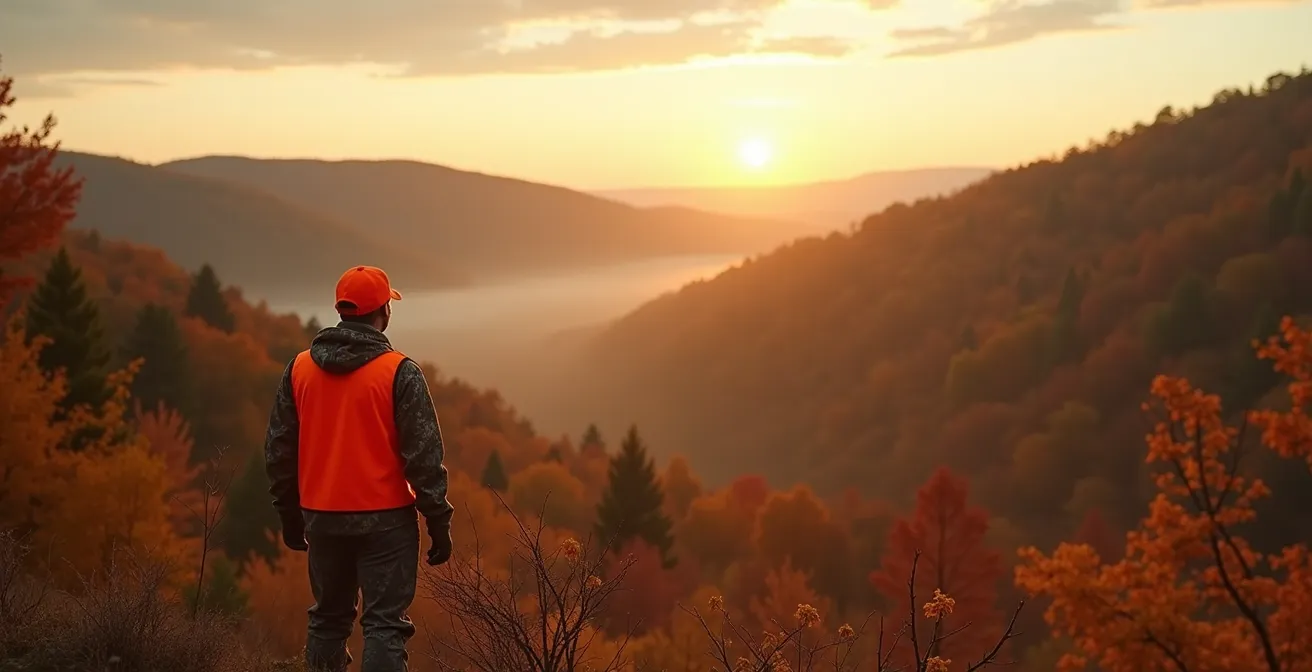
In summary:
- Game animals like deer are effectively colorblind to blaze orange, but they can see the UV light from detergents on your clothes.
- True stealth involves managing your entire sensory profile: visual (UV), acoustic (fabric noise), and cognitive (target identification).
- Properly sizing and layering your vest is crucial for mobility and insulation, not just compliance.
- Safety extends beyond visibility; it includes positive target identification and advanced hearing protection that enhances awareness.
For many hunters, the mandate to wear blaze orange feels like a direct conflict with the core principles of concealment. The fear is simple and potent: that this vibrant, unnatural color will act as a beacon, alerting every animal in the woods to your presence. This often leads to a frustrating trade-off between following the law and maximizing the chances of a successful hunt. Many guides offer the simple advice to “just wear it” or make the oversimplified claim that “deer are colorblind,” but this ignores the genuine concerns of experienced hunters who know that every small detail matters.
The common wisdom often misses the crucial nuances of animal perception. It’s not just about color; it’s about light, sound, and pattern. The real challenge isn’t the orange itself, but the entire sensory signature you project. But what if the dichotomy between safety and stealth is a false one? What if, instead of a compromise, there was a way to optimize for both? The key is not to simply wear the gear, but to master the science behind it—to understand animal perception and gear technology so deeply that you can become invisible to game while remaining unmistakably human to other hunters.
This guide moves beyond the basics. We will deconstruct the science of why deer can’t see orange but might see your detergent. We’ll explore the technical details of gear selection, from acoustic properties of fabrics to the strategy of layering. By treating your safety gear as an integrated system, you can transform it from a liability into a strategic asset, ensuring you are both safe and silent in the field.
This article breaks down the essential strategies and scientific principles for integrating hunter orange into your stealth system. Explore the topics below to master every aspect of this critical skill.
Summary: A Systematic Approach to Hunter Orange and Concealment
- Why Deer Cannot See Blaze Orange But Turkeys Can?
- How to Size a Safety Vest to Fit Over a Winter Parka?
- Mesh vs Fabric Vests: Which Is Quieter in the Wind?
- The Detergent Mistake That Makes Your Orange Vest Glow to Animals
- Where to Pack Your Vest for Quick Access When Crossing Public Land?
- The Line-of-Fire Mistake That Endangers Hunting Partners in Brush
- Digital vs Mimicry Patterns: Which Blends Better in Hardwood Forests?
- Electronic vs Passive: Which Headset Protects Hearing While Amplifying Whispers?
Why Deer Cannot See Blaze Orange But Turkeys Can?
The foundation of using hunter orange effectively lies in understanding a concept we can call perceptual duality: the gear is simultaneously invisible to certain game and highly visible to humans. This isn’t magic; it’s a function of different species’ eye structures. Humans have trichromatic vision, with three types of color-receptive cones (red, green, and blue), allowing us to see a full spectrum of color, including the vibrant wavelengths of blaze orange.
Deer, on the other hand, have dichromatic vision. They lack the red-sensitive cone, meaning reds and oranges don’t appear as distinct colors. To a deer, your blaze orange vest appears as a shade of brownish-gray, not unlike the tree bark and dead leaves around you. A study by researchers at the University of Georgia used photo software to simulate this “deer vision,” confirming that orange and red hues blend into the muted tones of the forest. However, this same research highlights a critical vulnerability. Deer can see light in the ultraviolet (UV) spectrum, something humans cannot. This is because their eyes contain far more rods than cones, making them masters of low-light vision and, according to research by the National Deer Association, able to see blue wavelengths 20 times better than humans.
This is where turkeys and other birds differ. Most birds possess tetrachromatic vision, meaning they have four types of cones, including one sensitive to UV light. This gives them superior color perception to humans. To a turkey, your blaze orange vest is not only visible but may appear even more vibrant, making it a poor choice for turkey hunting concealment where full camouflage is paramount. The key takeaway is that blaze orange works for ungulate hunting precisely because of the limitations of their vision, not in spite of them.
How to Size a Safety Vest to Fit Over a Winter Parka?
A common mistake hunters make is buying a safety vest in their normal shirt size, only to find it’s restrictive and noisy when stretched over bulky winter layers. Proper sizing isn’t just about comfort; it’s a critical part of a systemic layering strategy that impacts your mobility, insulation, and stealth. An ill-fitting vest can compress the loft of your parka’s insulation, reducing its effectiveness, or bind across your shoulders, impeding your ability to draw a bow or shoulder a rifle smoothly.
When selecting a vest for cold-weather hunting, think of it as the final piece of an integrated system. Start by looking for vests made from a 4-way stretch material. This fabric accommodates the movement and bulk of underlying layers, from a thin baselayer to a heavy insulated parka, without constricting you. For extreme cold conditions, a good rule of thumb is to choose a vest one full size larger than your typical jacket size. This ensures there’s enough room to prevent insulation compression.
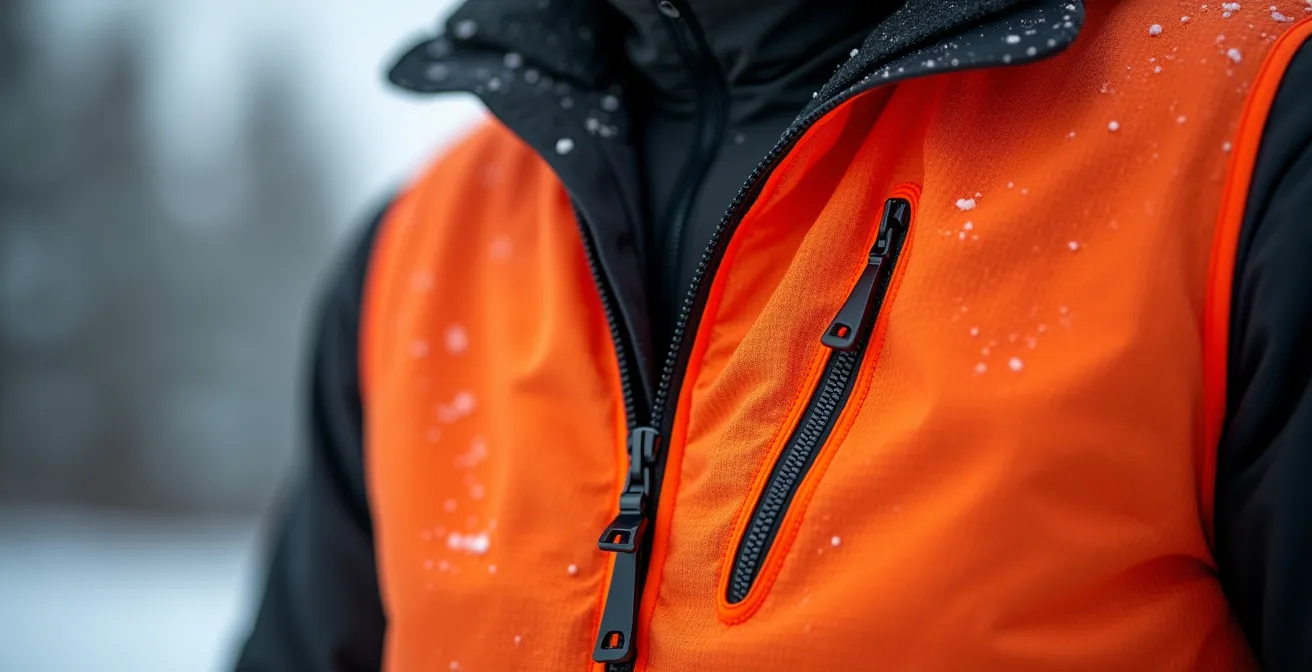
Before committing to a vest, test the fit with your full winter gear on. You should be able to perform your full range of motion without the vest pulling or bunching. Bend your arms, twist your torso, and simulate shouldering your firearm. Modern designs often include features like adjustable side straps, which allow for a customized fit across a wide range of sizes, and “KitLink” or pass-through portals that grant you access to the pockets of the jacket you’re wearing underneath. This thoughtful integration turns a simple piece of safety equipment into a functional part of your overall hunting apparel system.
Mesh vs Fabric Vests: Which Is Quieter in the Wind?
The choice between a mesh and a solid fabric vest is a classic trade-off between breathability and noise—your acoustic signature. There is no single “best” option; the right choice depends on your hunting style, the weather conditions, and your personal tolerance for noise. Understanding the physical properties of each material is key to making an informed decision that balances comfort with concealment.
Mesh vests are the undisputed champions of breathability and weight. They are ideal for early-season hunts or for hunters who are highly active and generate a lot of body heat. This is backed by data showing that mesh panels can enhance airflow by 20% compared to solid fabric, which also helps in dispersing scent. However, their primary drawback is noise. The stiffer strands of the mesh can create a high-frequency “swish” sound as they rub against each other or brush against vegetation, especially in windy conditions. This sharp sound can be more alarming to game than a duller rustle.
The table below breaks down the key performance differences between the two common vest materials, helping you weigh the trade-offs for your specific needs.
| Feature | Mesh Vests | Fabric Vests |
|---|---|---|
| Weight | 2-8 oz (ultralight) | 8-16 oz (heavier) |
| Breathability | 20% better ventilation | Standard ventilation |
| Noise Level | High-frequency ‘swish’ in wind | Low-frequency ‘rustle’ |
| Durability | May stretch/flap over time | Collects burrs, becomes noisier |
| Heat Reduction | 15% cooler | Better insulation |
| Scent Dispersion | Better odor ventilation | May trap body odor |
Solid fabric vests, typically made from brushed polyester or fleece-like materials, offer a quieter alternative. The soft texture produces a low-frequency “rustle” that is more akin to natural forest sounds. This makes them a preferred choice for still-hunting or sitting in a stand where absolute silence is paramount. The downside is reduced breathability and a tendency to collect burrs and other vegetation, which can add noise and become a nuisance to remove. Ultimately, the decision comes down to prioritizing ventilation for active hunts or silence for stationary ones.
The Detergent Mistake That Makes Your Orange Vest Glow to Animals
You’ve correctly chosen a vest that is quiet and fits perfectly. You’ve confirmed that deer can’t see the color orange. Yet, you could be unknowingly sabotaging your entire stealth effort with one simple mistake: washing your hunting gear with the wrong detergent. This is the critical point where the science of deer vision directly impacts your laundry routine. The issue isn’t the color of the fabric, but the invisible chemicals it might be treated with.
Most standard household laundry detergents contain optical brighteners or UV-enhancing agents. These chemicals are designed to absorb UV light and re-emit it in the blue spectrum, making whites appear “whiter” and colors “brighter” to the human eye. However, since deer can see UV light, clothing washed with these detergents can appear to glow with an eerie, unnatural blue-white light, especially in the low-light conditions of dawn and dusk. This phenomenon of UV contamination instantly flags you as something alien in their environment, negating any camouflage advantage you thought you had.
To avoid this critical error, you must treat your hunting clothes—including your blaze orange vest—with a specific laundering protocol. The goal is to eliminate any and all UV-reflecting residues. This ensures that what a deer sees is the dull, non-threatening gray-brown of the fabric itself, not a glowing spectral warning sign. Following a strict washing regimen is as important as any other aspect of your concealment strategy.
Action Plan: UV-Elimination Laundry Protocol
- Source a UV-free detergent specifically designed for hunting apparel; avoid all standard detergents.
- Wash garments in cold water (30°C/86°F or below) to protect fabric integrity and color.
- Never use fabric softeners, as their chemical residues can reflect UV light.
- Air-dry your gear away from direct sunlight, which can degrade fabric and fade colors over time.
- As a final check, take your gear into a completely dark room and inspect it with a blacklight; any glowing blue-white spots indicate UV contamination. If found, consider treating with a UV-blocking spray.
Where to Pack Your Vest for Quick Access When Crossing Public Land?
The logistics of carrying your hunter orange vest are just as important as wearing it. Many hunting areas involve crossing different types of land—moving from a private parcel where orange may not be required to an adjacent public forest where it is mandatory. Being able to access and don your vest quickly and efficiently at these boundaries is key to staying compliant and safe without unnecessary fumbling or noise.
The worst place to store your vest is buried at the bottom of your main pack. This forces you to stop, remove your pack, and rummage through your gear, creating noise and movement at a critical transition point. The best strategy is to keep your vest immediately accessible on the exterior of your backpack. Most modern hunting packs are equipped with compression straps, a beavertail flap, or an external pocket designed for this exact purpose. Roll your vest tightly and secure it under these straps.
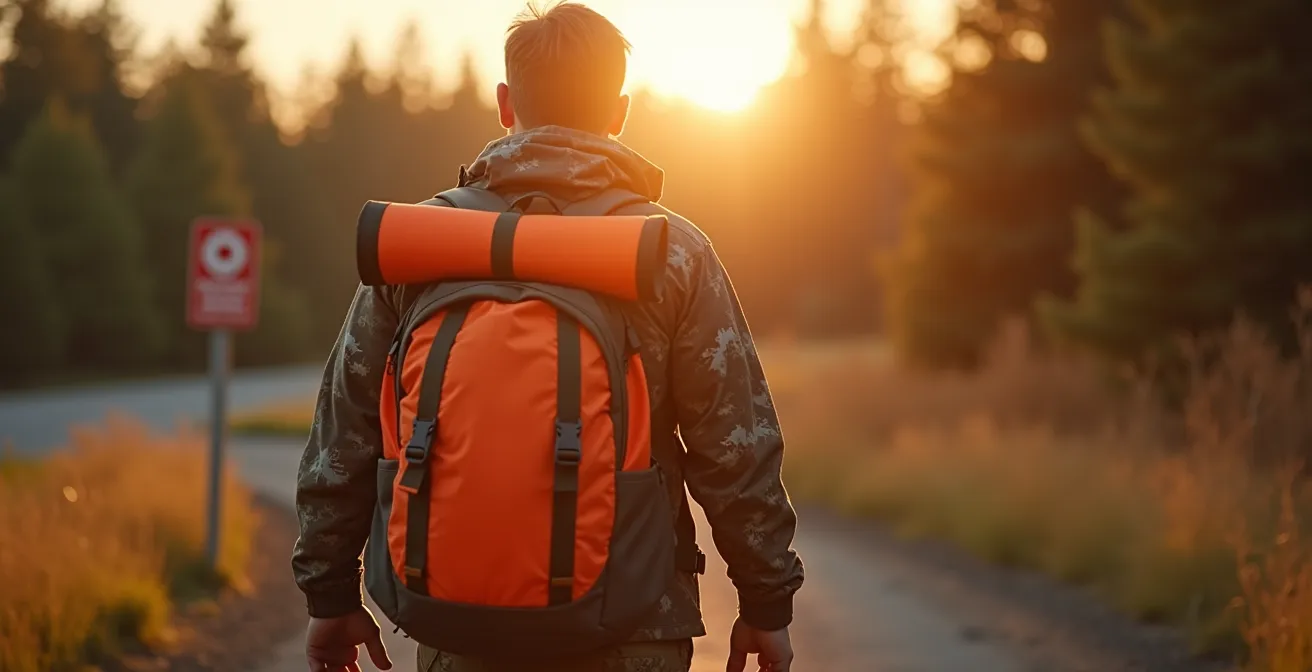
This method allows you to retrieve and put on your vest in seconds without even having to remove your pack. It ensures you are compliant the moment you step onto public land, respecting both the law and the safety of other hunters in the area. This is not a trivial matter; it’s about building efficient habits that keep you safe and legal. Remember that you are responsible for complying with regulations that, according to state hunting regulations compiled by Hunter-Ed, often mandate 400 to 500 square inches of visible blaze orange on the head, chest, and back.
Another smart option is to use a small, dedicated blaze orange pack or fanny pack that meets the square-inch requirements on its own. This is particularly useful for hunters who prefer a minimalist setup and don’t carry a full backpack. The principle remains the same: ensure your blaze orange is either worn or immediately ready to be worn the instant you enter an area where it is required by law.
The Line-of-Fire Mistake That Endangers Hunting Partners in Brush
Wearing blaze orange is a fundamental pillar of hunter safety, drastically reducing the risk of being mistaken for game. In fact, U.S. Army safety data reveals that hunters wearing appropriate orange are seven times less likely to be shot in a hunting-related incident. However, relying on color alone creates a dangerous cognitive trap. The most critical mistake a hunter can make is assuming that the flash of orange seen through thick brush is definitively their hunting partner and therefore a safe direction to fire.
This is a failure of positive target identification. Your blaze orange vest makes you visible, but it does not, by itself, identify you as a human being. A patch of orange glimpsed through dense foliage could be another hunter you weren’t aware of, a hiker, or even a piece of lost equipment. Firing in that direction, even if not directly at the color, without a clear view of your target and what lies beyond it, is one of the most hazardous actions in hunting. This is especially true when hunting in a group in brushy terrain, where lines of sight are short and constantly changing.
The responsibility always lies with the shooter to be 100% certain of their target. As one expert succinctly puts it, the color is just one part of a much larger safety equation.
Hunter orange makes you visible, but it doesn’t identify you as human. The most critical safety habit is positively identifying your target and what is beyond it, regardless of color.
– Lt. Jason Ploss, Conservation Law Enforcement, Fort Leonard Wood
True field safety requires expanding your awareness beyond simple color detection. It demands constant communication with your partners about positioning, establishing clear zones of fire, and treating every shot with the discipline to hold back unless you have absolute certainty. Blaze orange is your first line of defense against being misidentified, but your trigger discipline is the ultimate safeguard for everyone in the woods.
Digital vs Mimicry Patterns: Which Blends Better in Hardwood Forests?
While the base color of your safety gear is non-negotiable, many manufacturers now offer blaze orange vests and jackets with overlaid camouflage patterns. This raises a sophisticated question of concealment theory: which type of pattern, mimicry or digital, is more effective at breaking up your silhouette when layered over a bright color? The answer depends on distance and how the animal’s brain processes shapes.
Mimicry patterns use realistic images of leaves, bark, and branches. Their strength is at close range (under 20 yards), where the detailed shapes can convincingly replicate the immediate environment. A deer looking at a hunter in a mimicry pattern from a short distance might perceive the individual shapes as actual leaves and branches, helping the hunter blend in. However, as the distance increases, these small, detailed elements begin to “blob” together. From 50 yards or more, the intricate pattern loses its definition and can appear as a single, solid dark shape against the bright orange background, making the human silhouette more obvious.
Digital or abstract patterns, on the other hand, use macro and micro-patterns of geometric shapes (pixels) or abstract blobs. They are less realistic up close but excel at disrupting the human form at mid to long ranges. The larger, more abstract blocks of color prevent the “blobbing” effect. They work by tricking the brain’s edge-detection ability, making it harder to distinguish a coherent human silhouette. This principle of silhouette disruption is often more effective in the varied light and shadow of a hardwood forest than perfect color matching.
| Pattern Type | Close Range (0-20 yards) | Mid Range (20-50 yards) | Long Range (50+ yards) |
|---|---|---|---|
| Mimicry (Leaves/Bark) | Excellent detail recognition | Begins to ‘blob’ together | Appears as solid dark shape |
| Digital/Abstract | Less realistic up close | Maintains shape disruption | Superior silhouette breakup |
| Negative Space Patterns | Good light matching | Excellent shadow integration | Best for ambient forest light |
A third category, negative space patterns, focuses less on adding detail and more on using disruptive shapes and color gradients to match the ambient light of the forest. These can be exceptionally effective at integrating with the shadows and dappled light typical of a hardwood canopy. When choosing a patterned orange vest, consider your primary hunting style. For close-range bowhunting in a ground blind, mimicry might suffice. For rifle hunting in more open hardwoods where shots are longer, a digital pattern will provide superior silhouette breakup.
Key Takeaways
- Stealth and safety are not mutually exclusive; they are parts of an integrated system you can optimize.
- Animal perception is the key: deer are blind to orange but highly sensitive to UV light from detergents and movement.
- Your gear’s acoustic signature (fabric noise) and its fit within your layering system are as important as its color for effective concealment.
Electronic vs Passive: Which Headset Protects Hearing While Amplifying Whispers?
Expanding your sensory management beyond sight and sound production leads to a crucial element of the situational awareness spectrum: what you can hear. The blast of a firearm can cause permanent hearing damage, making hearing protection non-negotiable. However, traditional passive earmuffs or earplugs, while effective at blocking harmful noise, also block the subtle sounds—a twig snapping, the rustle of leaves, a whispered word from a partner—that are vital for detecting game and maintaining safety.
This is the dilemma that electronic hearing protection is designed to solve. Unlike passive headsets that simply muffle all sound, electronic models use an advanced system of microphones and speakers. They amplify ambient, low-decibel sounds to a clear, audible level, sometimes even enhancing them beyond normal human hearing. This allows you to hear the faintest environmental cues with remarkable clarity. Simultaneously, a sound-activated compression circuit instantly shuts down the amplification the moment a loud noise (like a gunshot) exceeds a safe decibel threshold (typically around 82-85 dB), protecting your ears from the damaging impulse.
Passive headsets, on the other hand, are a simpler, more affordable option. They rely purely on sound-dampening materials to achieve their Noise Reduction Rating (NRR). While they provide excellent protection from loud noises, they do so at the cost of situational awareness. They are a good choice for situations where hearing ambient sound is not a priority, such as at a shooting range, but can be a significant disadvantage in the field where detecting game is paramount.
When choosing, the primary trade-off is between the enhanced awareness and higher cost of electronic headsets versus the simplicity and affordability of passive ones. For the serious hunter, the ability of electronic hearing protection to both safeguard hearing and amplify critical sounds represents a profound tactical advantage, completing the sensory system that allows you to be fully present and aware in your environment.
By mastering this complete system—managing your visual signature down to the UV spectrum, controlling your acoustic profile, and enhancing your auditory awareness—you transform a legal requirement into a tactical advantage. You prove that a hunter can be perfectly safe and utterly invisible at the same time. The next logical step is to audit your current gear and practices against these principles to identify areas for improvement.