In summary:
- True wading safety is not a list of tips, but an understanding of river dynamics, human physiology, and environmental physics.
- Use quantifiable rules like the “Rule of Ten” to assess risk objectively before entering the water.
- Your choice of gear, from boot soles to sunglasses, must be an informed decision based on specific alpine conditions like algae-covered rocks and high-altitude UV exposure.
- Recognize that cold water shock is an involuntary physiological response that can occur even on warm days, making temperature awareness critical.
- Safe wading is a science: master the principles of stability, friction, and risk calculation to navigate any current with confidence.
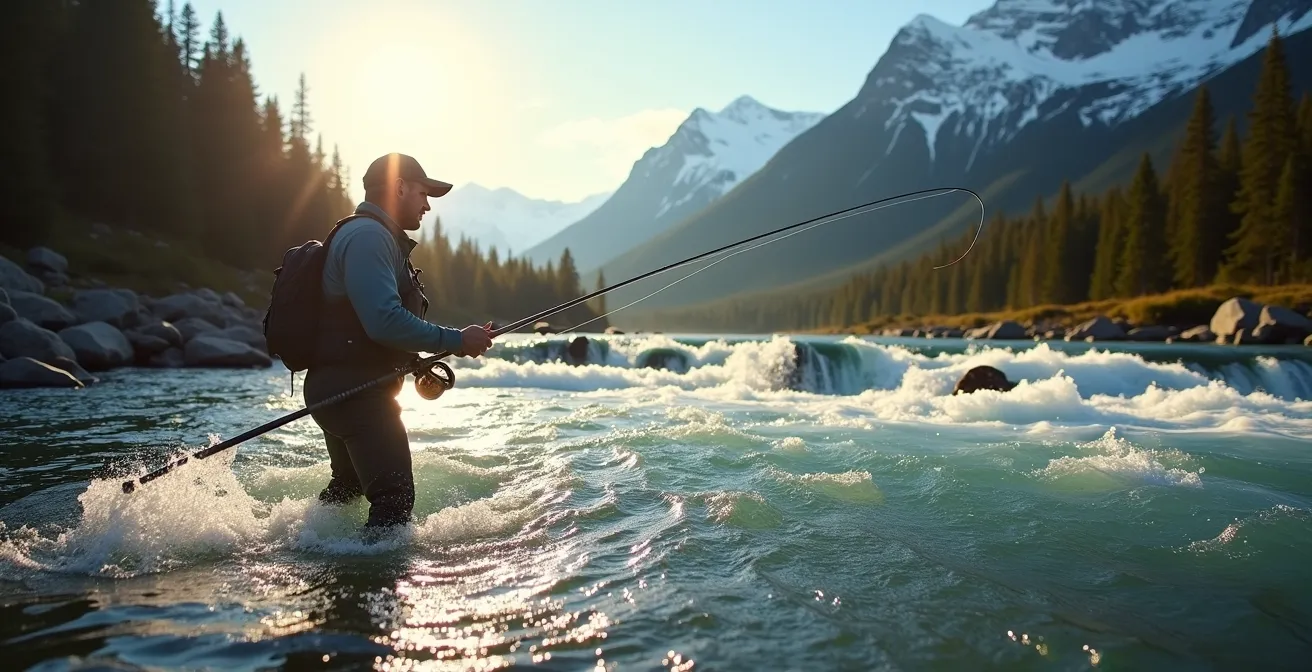
The push of an alpine river is a force of nature—relentless, cold, and profoundly deceptive. For anglers drawn to these high-gradient waters, the challenge of staying upright on a bed of slick, rolling stones is constant. Many rely on a few common pieces of advice: get a good wading staff, buy boots with grip, and take it slow. While this advice is not wrong, it is dangerously incomplete. It treats a complex problem of physics and physiology as a simple checklist, leaving anglers unprepared for the true hazards of turbulent water.
This approach often fails because it ignores the ‘why’ behind the ‘what’. Why does a seemingly calm current suddenly have the power to sweep you off your feet? Why is the cold a greater danger than the current itself, even on a sunny summer afternoon? Relying on generic tips without understanding the underlying principles is like navigating a minefield with a vague map. It might work for a while, but it won’t prevent a catastrophic mistake.
This guide takes a different approach. We will move beyond the platitudes and into the science of safe wading. The true key to mastering fast-flowing rivers is not just having the right gear, but understanding the forces at play: the hydrodynamics of the current, the biomechanics of a stable stance, the body’s involuntary physiological response to cold, and the unique environmental physics of high-altitude sun and water. This is about transforming your mindset from a hopeful wader into a calculated student of the river, capable of reading the water, assessing the risk, and moving with intentional safety.
This article will deconstruct the science behind staying safe in challenging currents. We will explore how to quantify risk, optimize your stability, choose the right equipment based on scientific principles, and understand the invisible dangers that lurk in these pristine environments. Read on to equip yourself with the knowledge that truly keeps you safe.
Summary: How to Wade Safely in Fast-Flowing Alpine Rivers
- How to Identify Safe Crossing Points in Turbulent Water?
- High-Sticking: How to Keep Line Off the Water to Fish Small Pockets?
- Felt Soles vs Aluminum Cleats: Which Grips Slippery Algae Rocks Best?
- The Cold Water Danger Even on Sunny Summer Days in the Alps
- Why High Elevation Sun Burns Skin Faster Near Reflective Water?
- How to Use the ‘Smearing’ Technique on Smooth Rock Slabs?
- Filter or Boil: Which Method Is Safer for Stagnant Pond Water?
- The ‘Cone of Vision’: How to Approach Trout Without being Seen?
How to Identify Safe Crossing Points in Turbulent Water?
The single most critical decision an angler makes is where to enter the water. In turbulent alpine rivers, this choice cannot be based on intuition alone. It requires a methodical risk calculation. The force exerted on your body by moving water increases exponentially with its speed and depth. What feels like a gentle push in ankle-deep water can become an immovable, dangerous force at knee-height. Therefore, the goal is to move from guessing to assessing, using a simple but effective hydrodynamic principle.
The “Rule of Ten” is a field-tested formula that provides a crucial safety baseline. It states that for most adults, wading becomes hazardous when the product of the water’s velocity (in feet per second) and its depth (in feet) exceeds the number ten. This isn’t an arbitrary number; it’s a simplified expression of the point where the force of the water is likely to overcome your ability to remain stable. To use it, you must estimate both variables. Velocity can be gauged by timing a floating stick over a set distance, and depth must be continuously probed with a wading staff.
Choosing a crossing point should always prioritize wider, shallower, and slower sections of the river. A narrow channel concentrates the river’s entire force, dramatically increasing its velocity. Look for gravel bars or areas where the river spreads out. These spots dissipate the water’s energy, making them inherently safer. Never commit to a crossing without a clear exit point, and always be prepared to abandon an attempt and backtrack if the force becomes uncomfortable. Safety is not about bravery; it’s about objective risk assessment.
Your 5-Point River Crossing Safety Audit
- Assess the numbers: Before entering, estimate the velocity and depth to apply the “Rule of Ten”. Is the product of V (ft/s) x D (ft) safely below 10?
- Plan your path: Identify your entry point, your entire crossing path, and a safe exit point on the opposite bank before you take your first step.
- Check your stability points: Do you have a wading staff for a third point of contact? Is your footing secure on the bank before you commit to the current?
- Evaluate the riverbed: Using polarized glasses, can you see the bottom? Are you crossing over stable gravel or potentially rolling boulders?
- Confirm your escape route: Always maintain a clear path to retreat. If conditions change or feel unsafe, your plan should be to back out, not to push forward.
Ultimately, a safe crossing begins with the humility to recognize that the river is always more powerful. By replacing guesswork with a simple calculation and a strategic plan, you shift the odds dramatically in your favor.
High-Sticking: How to Keep Line Off the Water to Fish Small Pockets?
High-sticking is a critical technique for fly fishing in the complex currents of alpine rivers, allowing you to present a fly in small pockets of calm water without the main current dragging your line. However, the posture required—rod held high, arm extended—can compromise your balance precisely when you’re standing in challenging water. Therefore, mastering high-sticking is as much an exercise in biomechanical stability as it is in fly presentation.
The key to maintaining stability is to create a wide and low base of support. This involves more than just your two feet; it requires the systematic use of a wading staff to create a stable tripod. At all times, you should aim to have at least two solid points of contact with the riverbed. When you take a step, you first plant your wading staff firmly downstream, creating a new anchor point before you lift your foot. This ensures you are never balanced on a single leg, which is the most vulnerable position in a strong current.
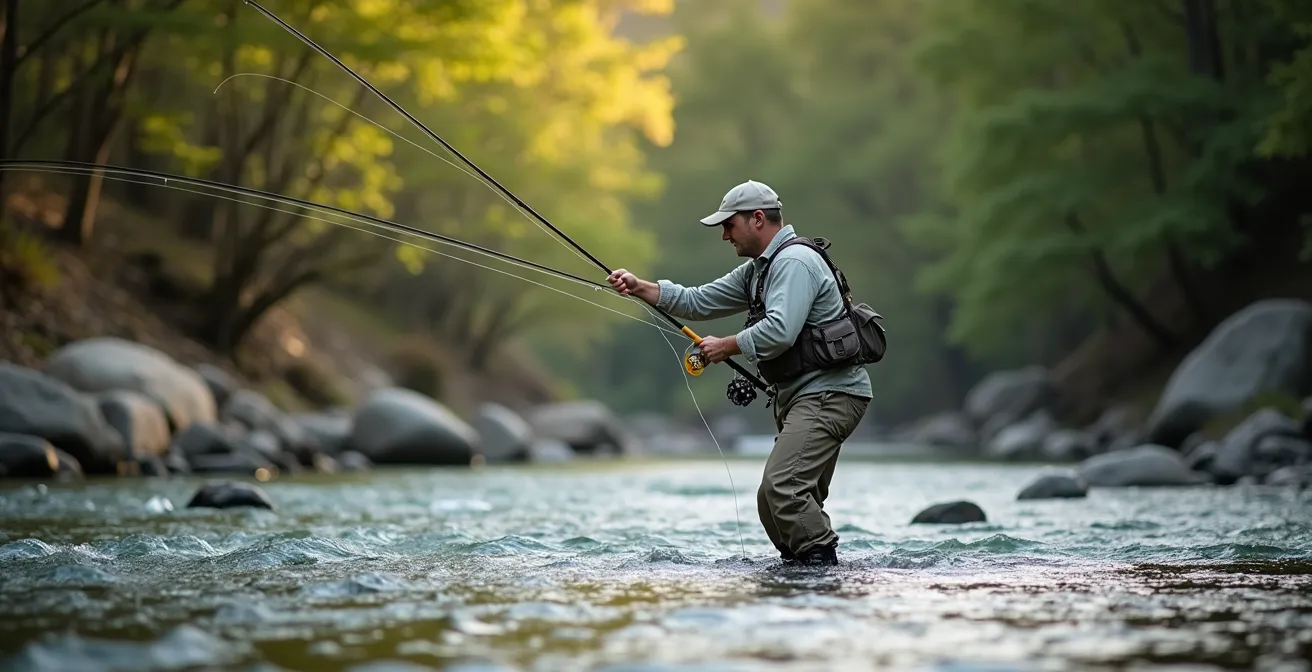
As the illustration demonstrates, the angler’s stability is an engineered system. The feet are planted wide apart, lowering the center of gravity. The wading staff is placed downstream, acting as a brace against the primary force of the water. This forms a rigid triangle, the strongest simple structure in engineering. While one arm is high managing the rod and line, the other is dedicated to anchoring the staff, and the core muscles are engaged to connect these points into a solid unit. This conscious creation of a stable base allows the angler to focus on the delicate task of fishing, even while standing in a powerful current.
By viewing stability through a biomechanical lens, you transform the act of wading from a precarious balancing act into a deliberate, controlled posture. The staff is not just a walking stick; it’s an integral part of your foundation.
Felt Soles vs Aluminum Cleats: Which Grips Slippery Algae Rocks Best?
The interface between your boot and the riverbed is where the battle for footing is won or lost. In alpine rivers, rocks are often covered in a layer of slick algae, colloquially known as “rock snot.” This low-friction surface makes standard rubber soles nearly useless. The choice of wading sole is therefore a critical decision of material science, with the primary contenders being felt, studded rubber, and aluminum cleats.
Felt soles have long been the gold standard for grip on slippery, algae-covered rocks. The porous, fibrous material conforms to the micro-texture of the rock and provides excellent friction, feeling remarkably secure underfoot. However, this porosity is also their greatest weakness. They absorb water, becoming heavy, and can take a very long time to dry. More critically, they are notorious for trapping and transporting invasive aquatic species like Didymo (rock snot) and mud snails between river systems. Due to this ecological risk, felt soles are now banned in many states and regions.
This has led to the rise of high-performance rubber soles, often enhanced with metal studs or cleats. Modern sticky rubber compounds offer good grip on their own and are far superior on trails, mud, and snow. For in-stream use on slick rocks, they require studs. Aluminum cleats or bars are a further evolution, designed to cut through thick layers of algae and bite into the hard rock underneath. They offer outstanding traction on hard, non-porous rock but can feel skate-like on smoother, flatter stones where they can’t dig in.
The following table, based on data from fly fishing experts, breaks down the optimal use cases for each. A comparative analysis of wading techniques shows that while felt is secure, modern alternatives can match its performance with fewer downsides.
| Sole Type | Best Conditions | Advantages | Disadvantages |
|---|---|---|---|
| Felt Soles | Very secure on slippery rocks | Superior grip on algae-covered rocks | Stay wet for long time, harbor invasive species |
| Rubber with Studs | Muddy banks and bottoms, long distance hiking | Can be made as secure as felt on slippery rocks | May require additional studs for optimal grip |
| Aluminum Cleats | Hard, non-porous granite or volcanic rock | Excellent penetration on hard surfaces | Less effective on soft algae layers |
Ultimately, the best choice depends on the specific rivers you fish and local regulations. If using felt, it is your responsibility to meticulously clean your soles with a bleach solution after every trip to prevent the spread of invasive species. For most anglers today, a high-quality studded rubber or aluminum cleat system provides a safer and more responsible solution.
The Cold Water Danger Even on Sunny Summer Days in the Alps
In the mountains, the warmth of the sun is a liar. While the air temperature may be pleasant, alpine rivers, often fed by snowmelt, remain dangerously cold year-round. The most immediate and life-threatening danger of falling into this water is not hypothermia, but cold water shock—an involuntary physiological response that can be fatal in less than a minute.
Cold water shock is triggered when cold receptors in the skin are suddenly activated. This causes an uncontrollable gasp for air, followed by a period of hyperventilation. If your head is underwater during that initial gasp, you will inhale water. The response is not a matter of mental toughness or swimming ability; it is a reflex. According to research from cold water safety experts, the maximum-intensity cold shock response, including a complete loss of breathing control, occurs at water temperatures between 50°F-60°F (10°C-15.5°C). This is a temperature range common to many alpine rivers throughout the summer.
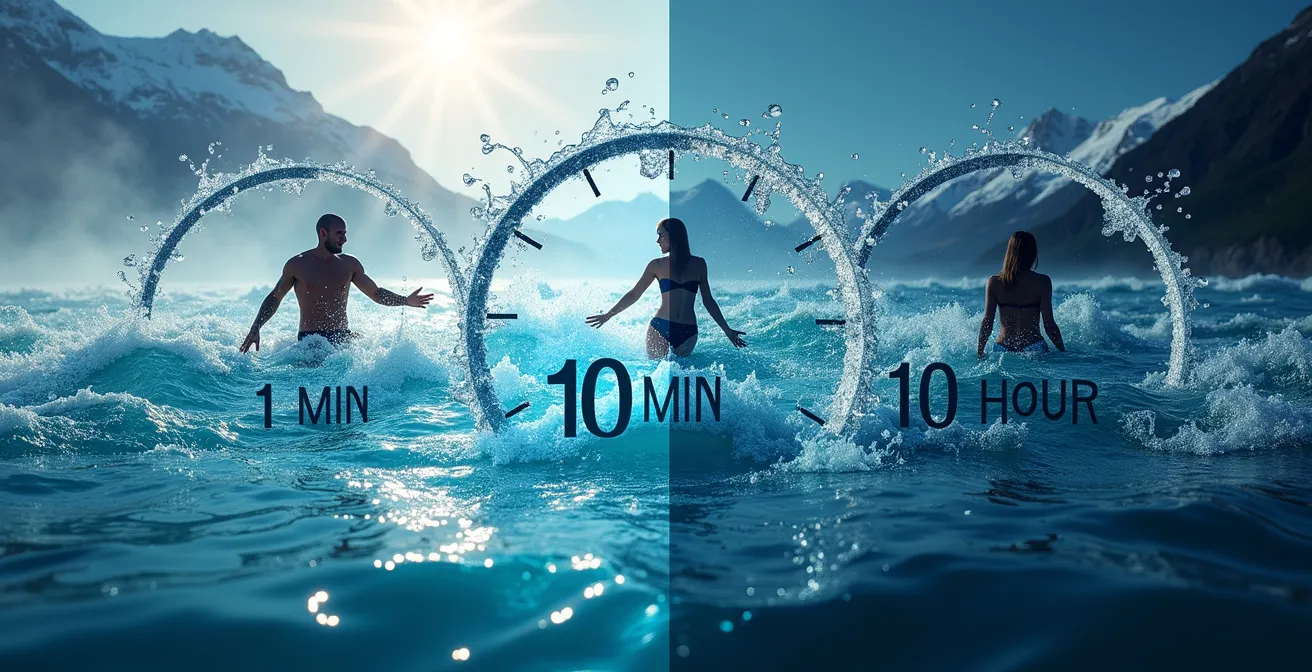
Safety guidelines confirm this risk. Data shows that water temperatures below 15°C (59°F) are dangerous, and these temperatures are present in alpine waters all year. Survival in cold water follows the 1-10-1 principle: you have about 1 minute to get your breathing under control, about 10 minutes of meaningful movement before your muscles become incapacitated by the cold, and about 1 hour before you become unconscious due to hypothermia. For a wading angler, that first minute is the most critical. If you fall, the priority is to fight the panic, avoid the initial gasp, and get your airway clear of the water.
Always wear a wading belt cinched tightly to prevent your waders from filling with water, which would drag you down instantly. Consider wearing a personal flotation device (PFD), especially when wading in deep or powerful currents. The deceptive beauty of a mountain river hides a danger that is measured in seconds, not degrees.
Why High Elevation Sun Burns Skin Faster Near Reflective Water?
A common mistake for anglers in the high country is underestimating the sun. A cool breeze and crisp mountain air can mask the intensity of the solar radiation, which is significantly more powerful at altitude due to a combination of atmospheric and environmental physics. Getting a severe sunburn is not just uncomfortable; it can lead to dehydration and heat exhaustion, impairing judgment and physical performance when you need them most.
The first factor is altitude itself. The Earth’s atmosphere acts as a filter for ultraviolet (UV) radiation. As you gain elevation, there is less atmosphere above you to absorb these harmful rays. As a result, medical research indicates that with every 1,000 meters (about 3,280 feet) gained in elevation, UV levels can increase by about 10-12%. An angler fishing at 10,000 feet is exposed to roughly 30-40% more UV radiation than at sea level, even if the temperature feels cool.
The second factor is reflection. Many surfaces reflect UV rays, and water is a particularly effective one. The surface of the river acts like a mirror, bouncing UV radiation back up at you. This means you are being exposed to the sun from above and below simultaneously. This reflected light is especially dangerous for areas of skin that are normally shaded, such as underneath your chin, nose, and behind your ears. The constant exposure of the back of your hands while holding a fishing rod also makes them highly vulnerable. For this reason, a comprehensive sun protection strategy is not optional.
Your High-Altitude Sun Protection Checklist
- Cover all angles: Don’t forget to apply sunscreen to the area under your chin and nose, and on the inside and behind your ears, which are hit by reflected UV rays.
- Protect your hands: The backs of your hands are constantly exposed while fishing. Use sunscreen or invest in sun gloves for complete protection.
- Choose the right sunglasses: Opt for sunglasses that block 100% of UVA and UVB rays. Look for a label that says “UV 400” or “100% UV protection.”
- Reapply frequently: Sunscreen wears off with sweat and water exposure. Reapply at least every two hours, and more often if you are getting wet.
- Wear protective clothing: A wide-brimmed hat, long-sleeved shirts, and pants offer the most reliable form of sun protection.
Ignoring these environmental factors is a common but serious error. Proper sun protection is as crucial a piece of safety equipment as a wading staff, protecting your health and ensuring you can focus on navigating the river safely.
How to Use the ‘Smearing’ Technique on Smooth Rock Slabs?
Navigating large, smooth, and often slanted rock slabs in a river requires a different technique than walking on loose gravel or boulders. Here, the primary challenge is maximizing friction on a low-grip surface. This is where anglers can borrow a concept from rock climbing known as “smearing.” Smearing is the technique of maximizing the surface area of your boot sole in contact with the rock to generate as much friction as possible, rather than relying on edges or points.
To smear effectively, you must trust your footwear. With your body weight pressing down, a good rubber or felt sole can generate significant grip on a seemingly slick surface. The key is to plant your foot flatly and deliberately, feeling for the purchase. This must be combined with a lowered center of gravity by bending your knees and leaning slightly into the rock slab. This posture increases the downward pressure (normal force), which in turn increases the frictional force holding you in place.
While smearing addresses the foot-to-rock interface, overall stability still depends on your body’s interaction with the current. You must orient your body sideways to the current to present the narrowest profile, minimizing the force pushing against you. Shuffling your feet instead of taking high steps is crucial; lifting a leg creates a moment of instability and allows the current to push your supporting leg out from under you. Always lean slightly into the current, using its force to help press you upright and into the riverbed, rather than letting it push you downstream.
Professional Guide Technique for Rock Navigation
Experienced guides often avoid standing directly on top of large, potentially slick boulders whenever possible. Instead, they advise looking for the gravelly sections between bigger stones. By doing this, you can slide your feet into position and work them down between the rocks. This “wedging” technique provides lateral support from the adjacent stones, making a foot roll much less likely than if you were perched precariously on a rounded, algae-covered surface.
This technique is a perfect example of how wading is a full-body discipline. It’s not just about where you place your feet, but how you use your entire body as a system to maintain balance and control in a dynamic environment.
Filter or Boil: Which Method Is Safer for Stagnant Pond Water?
While an article on wading focuses on water as a physical obstacle, it’s also a life-sustaining resource that carries invisible risks. Staying hydrated is critical for maintaining physical performance and cognitive function, but drinking directly from any surface water source in the backcountry—even a clear-looking alpine stream—is a serious gamble. Water treatment is non-negotiable.
The primary concern in most water sources is biological contamination. Pathogens like Giardia and Cryptosporidium are microscopic parasites transmitted through animal feces that can cause severe gastrointestinal illness. Bacteria such as E. coli and Salmonella are also common. These organisms are prevalent even in the most pristine-looking environments. Stagnant pond water presents a higher risk than flowing rivers, as the lack of movement allows for higher concentrations of these pathogens to develop.
There are three main methods for making water safe to drink: filtration, chemical treatment, and boiling. Filters work by physically straining out pathogens. Most modern filters are effective against protozoa (like Giardia) and bacteria, but not all remove viruses, which are much smaller. Boiling is the most reliable method; bringing water to a rolling boil for one minute kills all pathogens—bacteria, protozoa, and viruses. Chemical treatments (using iodine or chlorine dioxide) are lightweight and effective against most pathogens, but they take time to work (from 30 minutes to 4 hours) and can leave an unpleasant taste.
In alpine environments, each method has unique considerations. Glacial meltwater, for example, is often full of fine, abrasive silt (“rock flour”) that can quickly clog and ruin a water filter. In freezing conditions, a wet filter can freeze and crack internally, rendering it useless without any visible sign of damage. Therefore, the “safest” method depends on the specific water source and environmental conditions.
Never assume clear water is clean water. A few minutes spent treating your water can prevent days or weeks of illness, which could be a life-threatening situation when you are far from help.
Key takeaways
- Objective Assessment is Paramount: Replace intuition with quantifiable rules like the “Rule of Ten” to make informed decisions about where and when to cross a river.
- Stability is an Engineered System: Use a wading staff not as a walking stick but as the third leg of a stable tripod, consciously creating a low, wide, and solid base.
- Gear is a Scientific Choice: Select boot soles, clothing, and sun protection based on the specific physical and environmental challenges of the alpine environment, from algae friction to UV reflection.
The ‘Cone of Vision’: How to Approach Trout Without being Seen?
A successful angler is a stealthy angler. In the crystal-clear water of alpine rivers, trout are acutely aware of their surroundings, and their survival depends on detecting threats from above and alongside the river. Spooking a fish is often the result of an angler unknowingly entering the trout’s “cone of vision,” a concept rooted in the physics of light and refraction.
A trout’s eyes are positioned on the sides of its head, giving it a nearly 360-degree field of monocular vision to detect movement. However, its binocular vision—the area where it sees most clearly and can judge distance—is a forward- and upward-facing cone. Due to the way light refracts at the water’s surface, this cone creates a circular “window” to the world above. Anything outside this window is invisible or distorted. The closer a trout is to the surface, the wider its window. An angler standing tall on the bank is a conspicuous silhouette against the sky, easily spotted from a distance.
Therefore, the key to a stealthy approach is to stay low and out of this window as long as possible. Approach from downstream and to the side of the fish, as their vision is weakest directly behind them. Crouch as you get closer to the bank to reduce your profile. Wear clothing that blends in with the background vegetation. Furthermore, avoid making sudden movements and creating excessive surface disturbance. The ripples you send out from wading carelessly are pressure waves that fish can detect with their lateral line, alerting them to your presence long before they see you.
Don’t take your footing for granted. Slow down.
– Sam, Fly Fishing Enthusiast, Sipping Mayflies Blog
In this way, the techniques for safe wading—moving slowly, shuffling feet, and minimizing disturbance—directly contribute to a more effective, stealthy approach. A safe angler is often an invisible angler.
Frequently Asked Questions on How to Wade Safely in Fast-Flowing Alpine Rivers
Why shouldn’t I drink directly from alpine streams?
Due to the prevalence of waterborne organisms such as coliform bacteria and giardia, do not drink directly from streams. Even the clearest water can carry microscopic pathogens from upstream animal life that can cause severe illness.
What additional precautions are needed in glacial areas?
Glacial meltwater contains fine abrasive silt (rock flour) that clogs most filters instantly. In these areas, boiling or chemical treatment is more reliable for water purification than filtration.
How should I maintain my water filter in freezing conditions?
Keep wet filters in your sleeping bag at night to prevent invisible cracking from freezing that renders them useless. If the internal elements of a filter freeze, they can crack, creating channels that allow pathogens to pass through undetected.