Hunting & Fishing
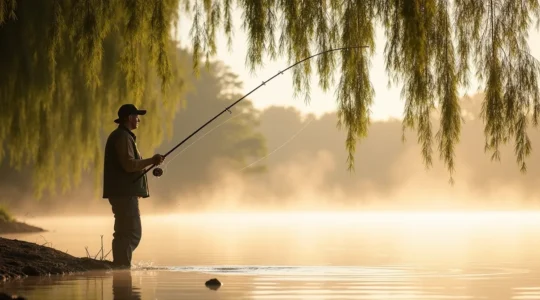
Spin Casting Accuracy: How to Hit Targets Under Overhanging Branches?
In summary: Stop using your whole arm; pinpoint accuracy comes from mastering a crisp, explosive wrist snap that controls the entire kinetic chain. Learn to load your rod’s tip like a catapult, using its flex to generate high tip velocity…
Read more
How to Read River Currents to Predict Where Trout Hold in Fast Water?
Anglers often struggle to locate trout in fast water because they rely on surface-level adages instead of understanding the underlying physics. The key to consistently finding fish and ensuring your safety is not just seeing the river, but interpreting it…
Read more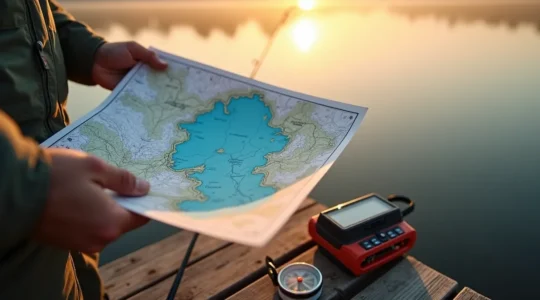
How to Read Lake Topography Maps to Find Summer Bass Hotspots?
The key to consistently finding summer bass is reading a topographic map not as a simple chart, but as a behavioral blueprint that predicts where fish will be and why. Structure like drop-offs and points are not just locations; they…
Read more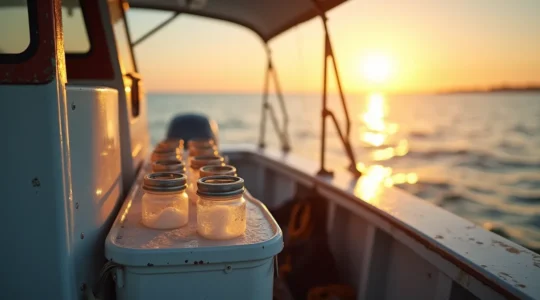
How to Keep Live Bait Energetic for 6+ Hours in Hot Weather?
The key to keeping live bait vigorous is not a collection of random tips, but the mastery of three core biological principles: thermoregulation, oxygenation, and stress mitigation. Sudden temperature changes (thermal shock) are more lethal than warm water itself; gradual…
Read more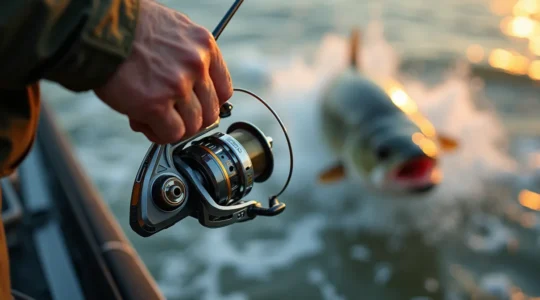
How to Adjust Spinning Reel Drag to Stop Line Breakage on Large Fish?
Losing a large fish to a line break isn’t bad luck; it’s a predictable system failure. The key isn’t a single “magic” drag setting, but understanding your reel as a high-performance machine. By mastering the relationship between line type, spool…
Read more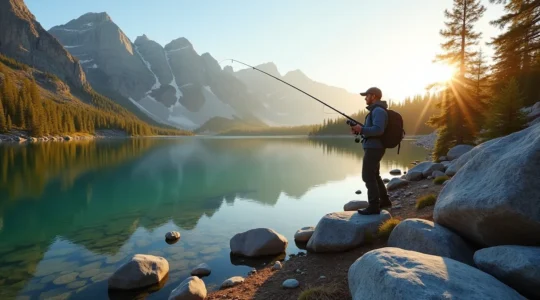
Why a Telescopic Rod is the Ultimate Survival Tool for the Ultralight Backpacker
The reliability of a telescopic rod in the backcountry depends less on its price tag and more on mastering techniques to prevent common failures. Proactive maintenance and understanding material limits are more critical than just choosing the lightest option. Proper…
Read more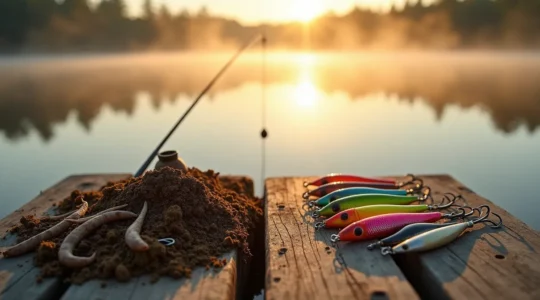
Simple Bait Fishing vs. Modern Lures: Which Catches More Fish for Beginners?
Catching your first fish isn’t about having the fanciest lure; it’s about learning to see the world through the fish’s eyes. Simple bait fishing forces you to develop patience and observation, turning waiting into an active learning process. Understanding and…
Read more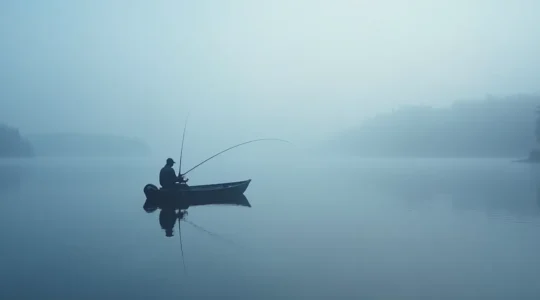
How to Adapt Angling Strategies When Cold Fronts Drop Water Temperature?
Success after a cold front isn’t about luck; it’s about systematically decoding the fish’s metabolic and behavioral response to environmental shock. Fish metabolism plummets with temperature, demanding slower retrieves and smaller, more vulnerable-looking baits. Bass reposition to stable zones (vertical…
Read more
Beyond 8×42 vs 10×42: An Expert’s Guide to Dominating the Field with Advanced Optics and Techniques
The endless 8×42 vs. 10×42 debate misses the point: superior field performance comes from mastering the ‘why’ behind your optics, not just the magnification number. Optical quality (like ED glass) provides better ‘information fidelity,’ reducing mental fatigue and leading to…
Read more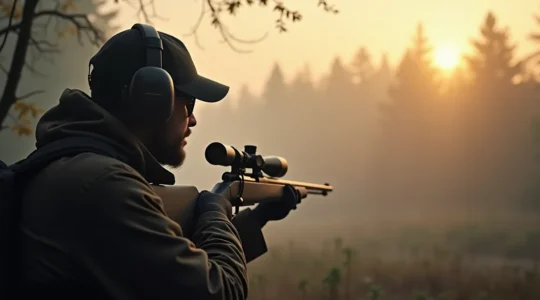
Electronic vs Passive: Which Headset Protects Hearing While Amplifying Whispers?
The best hearing protection for a hunter isn’t the one with the highest NRR, but the one that creates the best auditory signal-to-noise ratio. Electronic muffs use sound compression and stereo microphones to surgically isolate critical game sounds from distracting…
Read more