Outdoor Boots
Whether you’re navigating muddy riverbanks during fishing season, tracking game through rocky terrain, or simply exploring backcountry trails, your boots serve as the critical interface between you and unforgiving environments. Unlike casual footwear, outdoor boots must withstand prolonged exposure to moisture, temperature extremes, and abrasive surfaces while maintaining comfort and performance. The difference between a successful outing and a miserable experience often comes down to footwear that matches your specific needs.
Understanding outdoor boots requires looking beyond marketing claims to examine the fundamental elements that determine real-world performance. Construction methods, material selection, traction design, and proper maintenance all work together to create footwear that performs reliably when conditions turn challenging. This comprehensive examination explores how boots are built, how they perform across different scenarios, and how to maximize their functional lifespan through informed decisions and proper care.
What Determines Boot Longevity in Rugged Conditions?
The lifespan of outdoor boots depends on factors that extend far beyond initial purchase quality. While premium materials certainly matter, the interaction between construction techniques, usage patterns, and environmental exposure creates a complex durability equation. Recognizing these interconnected elements helps you identify boots built to last and avoid common failure points.
Critical Construction Methods
The way boot components connect fundamentally impacts durability. Stitchdown construction creates a wide, stable platform by stitching the upper directly to a midsole that extends beyond the boot’s footprint, offering excellent water resistance and resole potential. Goodyear welt construction uses a leather strip to join the upper, insole, and outsole, creating a cavity that can be re-stitched multiple times for professional resoling. Direct-attach methods bond rubber directly to uppers using heat and pressure, eliminating seams where water might penetrate but making repairs more challenging.
Each method presents trade-offs. Cemented construction, where adhesives join components, weighs less and breaks in faster but typically cannot be resoled. Norwegian welts add an extra exterior stitch that sheds water effectively in wet environments like marshes or stream crossings. Understanding these differences allows you to match construction to your primary activities—hunters covering diverse terrain might prioritize resoling capability, while ultralight anglers accessing remote streams may value weight savings.
Identifying Structural Weaknesses Before They Fail
Regular inspection reveals emerging problems while they’re still manageable. Check these vulnerable areas every few outings:
- Stitch integrity along welt seams and upper panels, looking for loose or broken threads
- Upper-to-sole bond lines for gaps or separation, especially near the toe and heel
- Leather condition around flex points where creasing may cause cracking
- Hardware attachment points where eyelets or hooks might be pulling through material
- Interior footbed and liner wear that indicates fit issues or pronation problems
Think of inspection as preventive maintenance rather than damage assessment. A small separation caught early can be repaired with adhesive and pressure; ignored, it becomes a gateway for moisture that accelerates deterioration throughout the boot. Hunters and anglers who clean their boots after each outing naturally incorporate inspection into their routine, catching problems when intervention remains simple and inexpensive.
Optimizing Performance Through Proper Fit and Selection
Performance in outdoor boots transcends comfort—it encompasses your ability to move confidently across technical terrain while maintaining energy efficiency throughout long days. This requires balancing competing priorities: support versus weight, stiffness versus flexibility, immediate comfort versus long-term fit after break-in.
The Weight and Support Equation
Every ounce on your feet demands approximately five times the energy of the same weight carried on your back. This biomechanical reality makes boot weight crucial for activities involving significant distance. However, lighter boots typically sacrifice support structures—internal shanks, thicker midsoles, reinforced counters—that provide stability on uneven ground and prevent foot fatigue.
Match boot weight to terrain difficulty and load carried. Day-hiking to fishing spots on maintained trails allows lighter, more flexible boots that reduce fatigue. Multi-day hunts carrying heavy packs over talus slopes demand stiffer, heavier boots that stabilize ankles and distribute load effectively. Mid-weight boots with moderate shanks offer versatility for mixed-use scenarios, though they optimize neither extreme.
Break-In Strategies for Technical Footwear
Quality outdoor boots require an adaptation period where materials conform to your foot shape and flex points soften. Rushing this process through extreme measures—soaking boots, applying excessive heat, or immediately wearing them on demanding trips—risks permanent damage to leather and accelerates breakdown of adhesives.
A systematic approach works better:
- Wear boots for short periods around home, gradually increasing duration over several days
- Focus on flexing the boot naturally through normal walking to soften the forefoot
- Address hot spots immediately with targeted stretching or temporary padding
- Progress to short outdoor excursions with light loads before committing to full trips
- Allow at least 20-30 hours of varied wear before evaluating final fit and comfort
Leather boots require more extensive break-in than synthetic models but offer superior long-term molding to foot shape. Consider this initial investment as insurance against blisters and discomfort during critical outings when you cannot simply turn back.
Matching Stiffness to Terrain Demands
Boot stiffness, often indicated by flex ratings, determines how much your foot can bend within the boot. Softer boots flex easily at the ball of the foot, allowing natural gait on flat or gently rolling terrain—ideal for stalking through forests or walking stream banks. Stiffer boots resist bending, forcing your entire leg to lift with each step, which proves advantageous on steep slopes, scree fields, or when front-pointing on icy patches.
Excessive stiffness on moderate terrain creates an awkward, energy-wasting stride. Insufficient stiffness on technical ground leaves feet vulnerable to bruising from rocks and reduces stability. Evaluate your typical environments honestly: hunters working diverse terrain benefit from moderate stiffness, while anglers primarily accessing gentler riparian zones can prioritize flexibility and comfort.
Decoding Traction Technology for Diverse Surfaces
Traction systems represent the most immediately consequential aspect of boot performance—inadequate grip can transform straightforward terrain into hazardous obstacles. Understanding how rubber compounds, lug patterns, and tread geometry interact with different surfaces allows you to assess boots beyond superficial tread appearance.
Rubber Compound Characteristics
Not all rubber performs identically. Softer compounds conform to surface irregularities and generate friction on smooth, wet rocks or slick mud, but wear faster on abrasive surfaces. Harder compounds resist abrasion on rocky terrain and maintain lug structure longer, but may feel less sticky on wet surfaces. Premium boots often use dual-density designs: softer rubber on contact surfaces for grip, harder rubber at the lug base for durability.
Temperature affects rubber performance significantly. Compounds that grip excellently in moderate conditions may stiffen and lose traction in freezing temperatures—a critical consideration for early-season hunters or cold-weather anglers. Some manufacturers incorporate additives that maintain flexibility across wider temperature ranges, though these formulations typically cost more.
Lug Depth and Pattern Design
Lug depth determines how effectively boots penetrate soft surfaces and shed debris. Deep lugs (5-7mm) excel in mud, loose soil, and snow by reaching through unstable surface layers to firmer ground beneath. Shallow lugs (3-4mm) work better on rock, hardpack, and indoor/outdoor transitions where excessive depth provides no benefit and may feel unstable.
Pattern geometry matters equally. Widely spaced lugs with aggressive angles shed mud effectively, preventing the tread-filling that turns boots into smooth-soled slides. Tightly packed patterns maximize contact area on hard surfaces but clog easily in sticky clay or wet leaves. Multidirectional lug angles provide braking and climbing traction, while heel-specific patterns may incorporate larger braking lugs oriented to resist backward sliding on descents.
Maintaining Traction Performance
Even excellent tread designs lose effectiveness when clogged with debris or worn smooth. After outings in muddy conditions, remove packed material from lug voids using a stiff brush—dried mud left in place reduces tread depth and masks wear patterns that indicate replacement needs. Inspect lugs regularly for signs of uneven wear that may suggest gait issues or improper fit causing abnormal foot placement.
Traction degrades gradually, making it easy to adapt unconsciously to reduced performance until a slip reveals the problem. When lugs wear to less than 2-3mm depth on primary contact areas, traction on wet or loose surfaces becomes compromised even if the boots otherwise remain functional. This threshold often arrives before other failure modes, particularly for users who primarily travel on abrasive rocky terrain.
Extending Functional Lifespan Through Proactive Care
The relationship between maintenance investment and boot longevity follows a steep curve—small, consistent efforts yield disproportionate lifespan extensions, while neglect accelerates multiple deterioration pathways simultaneously. Developing simple routines transforms boots from consumable items into long-term investments.
Reading Wear Patterns as Diagnostic Tools
How your boots wear reveals information about gait mechanics and fit issues. Excessive heel wear on the outer edge suggests supination, while inner heel wear indicates pronation—both signal potential needs for insoles or fit adjustments. Toe wear concentrated on one side may reflect leg length discrepancies or habitual posture when standing. Rapid wear across the entire forefoot often results from oversized boots where your foot slides forward with each downhill step.
Address patterns rather than symptoms. Simply replacing worn boots without correcting underlying causes means new boots will fail identically. If wear appears asymmetric or concentrated in unexpected areas, consider professional gait analysis or consultation with specialists familiar with outdoor footwear demands.
Professional Resoling Versus Replacement
When outsoles wear through but uppers remain sound, resoling extends boot life for a fraction of replacement cost—typically one-third to one-half the price of comparable new boots. This option only makes economic and functional sense when uppers retain structural integrity: leather remains supple without cracking, stitching shows no widespread failure, and waterproof membranes (if present) still function.
Resoling works best with welted construction specifically designed for the process. Some direct-attach boots can be resoled, but the procedure requires specialized equipment and may compromise waterproofing. Cemented construction generally cannot be resoled reliably. Before committing to resoling, evaluate whether the boots still fit properly—foot shape changes over time, and boots that fit excellently when new may no longer serve you optimally years later even with fresh soles.
Recognizing Safety-Critical Replacement Timing
Certain deterioration patterns demand replacement regardless of sentimental attachment or remaining tread depth. Separation between uppers and soles creates waterproofing failure and imminent complete detachment. Cracked leather around flex points cannot be reliably repaired and will worsen rapidly. Lost ankle support from broken-down counters increases injury risk on uneven terrain. Compressed midsoles that no longer rebound reduce shock absorption, transferring impact stress to joints.
When multiple systems show wear simultaneously—tread depth marginal, some upper stitching loose, midsole compression noticeable—replacement makes more sense than sequential repairs. Your boots serve as safety equipment in remote environments where failure has consequences beyond mere inconvenience. Budget for eventual replacement as part of your outdoor equipment lifecycle, setting aside funds proportional to use intensity rather than waiting for catastrophic failure to force rushed decisions.
Understanding outdoor boots as integrated systems rather than simple products transforms your relationship with this essential equipment. Construction knowledge guides initial selection toward boots matching your actual needs. Performance optimization through proper fit and break-in maximizes comfort and efficiency. Traction awareness keeps you safe across diverse conditions. Maintenance discipline extends functional life while preserving performance characteristics. Together, these elements ensure your boots remain reliable partners across countless miles of trails, riverbanks, and wild places where dependable footwear makes all the difference.
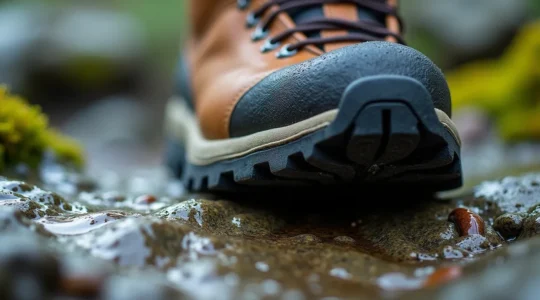
The Science of Grip: Why Vibram Outsoles Excel on Wet Rock and Prevent Slips
Securing your footing on wet, unpredictable terrain is less about the brand of your boot and more about understanding the physics of traction. The grip is determined by a formula: the right rubber compound for the temperature, a tread geometry…
Read more
High-Performance Hiking Boots: A Guide to Maximizing Agility on Alpine Trails
Maximizing alpine agility hinges on understanding the biomechanical trade-offs between footwear components, not just minimizing weight. Stiff soles provide superior edging on technical rock, while flexible soles offer better friction for smearing on slabs. Ankle stability is influenced more by…
Read more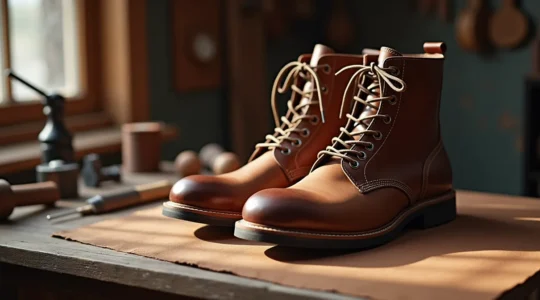
How to Identify Durable Boots That Survive 5+ Years of Abuse?
The key to finding boots that last isn’t the brand, but your ability to perform a pre-purchase failure point analysis. Most boots fail due to predictable weaknesses in construction, material choice, and user error, not random chance. Evaluating stitch density,…
Read more