
Contrary to the frustration they often cause, harvest quotas are not a punishment but a precise scientific instrument designed to increase the long-term health, abundance, and quality of game populations.
- Regulated harvests prevent population booms that lead to habitat destruction and mass starvation, preserving the ecosystem for future generations.
- Selective quotas are used as ecological levers to improve herd genetics, balance buck-to-doe ratios, and ensure a more stable and resilient population structure.
- The entire system of scientific wildlife management is primarily funded by hunters themselves through license fees and excise taxes.
Recommendation: Instead of viewing a tag limit as a restriction, consider it your active and essential role in a large-scale, science-driven project to engineer a better future for wildlife.
For many dedicated hunters, drawing a coveted tag only to be constrained by a strict bag limit can feel like a contradiction. The frustration is understandable; you’ve invested time, money, and passion, yet a regulation seems to arbitrarily cap your success. This feeling often stems from the common perception that quotas are simply about “saving” animals from hunters. While that contains a kernel of truth, it misses the far more complex and proactive reality of modern wildlife management.
The standard advice is to “follow the law” for the sake of “conservation,” but these platitudes fail to address the core frustration. They don’t explain the sophisticated science of population dynamics that underpins every tag lottery and bag limit. The truth is, these quotas are not passive restrictions; they are active ecological levers. Wildlife biologists and managers use harvest data as a primary tool to manipulate key population variables, effectively engineering healthier, more resilient, and ultimately more abundant game populations over the long term.
This is the counterintuitive principle at the heart of the North American Model of Wildlife Conservation: regulated, science-based hunting is not a detriment to game populations but a fundamental component of their prosperity. It’s a system that actively prevents the boom-and-bust cycles of starvation and disease that plague unmanaged herds, improves genetic fitness, and ensures the very habitat these animals depend on remains intact. This approach transforms the hunter from a simple consumer into a vital participant in a dynamic ecological process.
This article will deconstruct the scientific principles behind harvest quotas. We will explore how wildlife managers use hunter-supplied data to make critical decisions, why harvesting females can be the most important conservation action you can take, and how the entire system is funded and sustained by the very hunters it regulates. By understanding the “why,” the frustration of a bag limit transforms into the pride of being an indispensable conservation tool.
To navigate this complex topic, we will break down the core scientific pillars that justify and guide modern harvest strategies. This structure will illuminate how each element, from habitat health to hunter ethics, functions as a part of a single, interconnected system.
Summary: The Scientific Case for Modern Harvest Quotas
- Carrying Capacity: Why Too Many Deer Can Destroy a Forest Ecosystem?
- Why Mandatory Harvest Reporting Is Vital for Setting Next Year’s Limits?
- How Selective Harvest of Older Males Improve Herd Genetics?
- Buck-to-Doe Ratios: Why Harvesting Females Is Sometimes Necessary?
- Why Taking a Risky Shot Is the Ultimate Sign of Disrespect to Game?
- The Economic Cost of Poaching on Legal Hunters’ License Fees
- Wolf Reintroduction: How It Impacts Elk Herds and Hunter Success?
- How Hunters and Anglers Contribute More to Biodiversity Than Non-Consumptive Users?
Carrying Capacity: Why Too Many Deer Can Destroy a Forest Ecosystem?
The concept of “more is better” is a fallacy in population ecology. Every ecosystem has a finite carrying capacity—the maximum number of individuals of a given species that it can sustain indefinitely without degrading the environment. When a game population, such as white-tailed deer, exceeds this threshold, it triggers a devastating trophic cascade. The herd, desperate for forage, begins to systematically eliminate the forest understory. They consume saplings of oak, maple, and other hardwoods, preventing the next generation of trees from ever taking root. They browse preferred plants to the point of local extinction, reducing biodiversity and impacting other species that rely on that same vegetation.
This over-browsing creates a barren, park-like forest floor that is highly susceptible to erosion and invasion by non-native plant species. The health of the deer themselves plummets due to density-dependent factors. Malnutrition becomes rampant, leading to smaller body sizes, reduced reproductive rates, and a heightened vulnerability to diseases like Chronic Wasting Disease (CWD) and epizootic hemorrhagic disease (EHD), which can spread rapidly through a concentrated, stressed population.

This is not a theoretical problem. Field data demonstrates that as deer densities increase beyond what the habitat can support, the habitat’s ability to support them declines in turn. For example, a long-term study showed a decline where carrying capacity dropped from an estimated 23 to 21 deer per 259 hectares as a direct result of habitat degradation from overpopulation. In this context, a harvest quota is not a limit on hunting but a prescription for ecological health. By removing a calculated number of animals, hunters act as the primary management tool to keep the population in balance with its habitat, preventing mass starvation events and preserving the integrity of the entire forest ecosystem for all species.
Why Mandatory Harvest Reporting Is Vital for Setting Next Year’s Limits?
If carrying capacity sets the ecological speed limit, then mandatory harvest reporting is the speedometer. Without accurate, timely data from hunters, wildlife managers are effectively flying blind. Setting quotas becomes a matter of guesswork, a practice fraught with peril for any wildlife population. The alternative to this data-driven approach is fixed quota management, which can lead to disaster. As explained by population ecologists, this method is exceptionally risky.
Fixed quota management occurs when a predetermined, fixed number of animals is harvested from a population. Given variation in r, N and K, this can lead to catastrophic overharvesting and is considered very risky.
– Nature Scitable, Population Ecology at Work: Managing Game Populations
Modern wildlife management relies on a principle called adaptive management. This is a cyclical process: managers use the best available science to set initial harvest quotas, hunters report their harvest, biologists analyze this data to update population models, and then they adjust the next season’s quotas accordingly. Your harvest report is a critical data point in this cycle. It informs managers about total offtake, success rates, and the demographic structure (age and sex) of the harvested animals.
This data, combined with aerial surveys, disease monitoring, and habitat analysis, allows for the creation of sophisticated population models. These models estimate the population’s size, growth rate, and trajectory, enabling managers to make precise adjustments. For instance, if data shows a harsh winter led to lower fawn survival, quotas may be reduced. Conversely, if a series of mild winters and abundant food has caused the population to surge toward its carrying capacity, antlerless quotas may be increased. This precise calibration, made possible by hunter data, prevents both overharvesting and a destructive population explosion. A clear example of this success is found in Norway, where adaptive management based on careful monitoring allowed lynx populations to increase from a low of 259 to a target of 453 animals through quota adjustments.
How Selective Harvest of Older Males Improve Herd Genetics?
Harvest quotas are not solely about controlling total numbers; they are a sophisticated tool for manipulating the age and sex structure of a herd to achieve specific management goals. One of the most common—and often misunderstood—strategies is the implementation of antler point restrictions or other regulations designed to protect younger males and encourage the harvest of mature ones. This is not about trophy hunting; it is about restoring a natural breeding structure that has profound benefits for herd health and genetics.
In unhunted or lightly hunted populations, a small number of prime-age, dominant males (typically 4-8 years old) do the majority of the breeding. This ensures that the fittest genes are passed on and that the breeding season, or rut, is synchronized and brief. When hunter pressure is high and unselective, these mature males are often the first to be removed. This leaves a population skewed toward yearling and two-year-old bucks, who are physically mature enough to breed but lack the social dominance and experience of older animals. This can lead to a protracted, chaotic rut, with fawns being born later in the spring and summer. These late-born fawns have lower body weights, are less likely to survive their first winter, and enter the next breeding season at a disadvantage.
By implementing selective harvest regulations, managers use hunters to shift the age structure back toward a more natural state. Protecting younger bucks allows them to survive to maturity, increasing competition and ensuring that breeding is once again dominated by the most vigorous individuals. The results can be dramatic. In Pennsylvania, for example, regulations designed to protect younger bucks successfully reduced the yearling buck harvest from nearly 90% of the total buck harvest to around 48%, significantly increasing the number of mature bucks in the population and improving the overall health and timing of the rut.
Action Plan: Understanding Age-Structured Harvest Management
- Establish baseline population age structure through mandatory tooth aging of harvested animals to understand the current demographics.
- Set differential quotas that protect prime-age males (e.g., 3-6 years old) while allowing the harvest of younger and post-prime animals to shape the age pyramid.
- Implement antler restrictions based on spread or point count as a practical field tool to protect younger age classes from harvest.
- Monitor breeding synchronization by observing fawning periods; a tighter fawning window indicates a healthier, more efficient rut.
- Adjust quotas annually based on the collected age structure data and metrics of reproductive success to fine-tune the population.
Buck-to-Doe Ratios: Why Harvesting Females Is Sometimes Necessary?
Perhaps no aspect of harvest management elicits more debate among hunters than the practice of harvesting does. For generations, the ethos was to “never shoot a doe,” based on the simple logic that females produce the next generation. While well-intentioned, this mindset can be the single greatest obstacle to effective herd management, particularly when a population is at or above its carrying capacity. The simple biological fact is that the female portion of the herd dictates the population’s reproductive potential. You can harvest a significant number of bucks from a population with minimal impact on its overall growth rate, but the number of does directly determines how many fawns will be born next spring.
When a deer herd needs to be reduced to protect its habitat, harvesting does is the only efficient and effective way to do so. Managers carefully set antlerless quotas based on population models to achieve a target buck-to-doe ratio. A “healthy” ratio varies by region and management goal, but a more balanced ratio (e.g., one buck for every two or three does) generally leads to a more condensed and competitive rut, as discussed previously. In overpopulated areas with a highly skewed ratio (e.g., one buck to ten or more does), managers will issue a high number of antlerless tags to bring the population back into balance with its habitat and improve the overall herd dynamics.
This is not a theoretical exercise; it is a practical necessity. The management strategy chosen is directly tied to the population’s status relative to the ecosystem’s carrying capacity. Managers use a clear framework to decide the intensity of the doe harvest, ensuring the action is appropriate for the goal, whether that is rapid reduction or simple maintenance.
| Management Strategy | Population Status | Harvest Recommendation | Expected Outcome |
|---|---|---|---|
| High Population | Above Carrying Capacity | Aggressive doe harvest any opportunity | Rapid population reduction |
| Stable Population | At Carrying Capacity | Selective doe harvest | Maintain equilibrium |
| Low Population | Below Capacity | Minimal to no doe harvest | Population growth |
| Earn-a-Buck Programs | Variable | Must harvest doe before buck | Guaranteed antlerless removal |
Therefore, filling an antlerless tag is often the most significant conservation act a hunter can perform. It directly addresses the population’s growth engine, prevents habitat destruction, and helps create a healthier, more balanced herd for the future. It is a direct application of scientific principles to achieve a sustainable balance.
Why Taking a Risky Shot Is the Ultimate Sign of Disrespect to Game?
Hunter ethics and scientific management are inextricably linked. The data that drives population models depends on one critical assumption: that harvested animals are reported. However, there is a significant variable that is incredibly difficult to measure: wounding loss. An animal that is shot, wounded, and never recovered is, from a biological perspective, a harvested animal. It has been removed from the population. But because it is never reported, it creates a hole in the data, a ghost in the machine that undermines the accuracy of population models.
As wildlife management principles state, this “unreported harvest” is a critical blind spot that biologists must try to account for, often through educated estimates that introduce uncertainty into the models. Taking a risky shot—at a running animal, through heavy brush, or at a distance beyond your proven effective range—dramatically increases the probability of a non-lethal hit and a lost animal. It is the ultimate sign of disrespect not only to the animal itself but to the entire system of wildlife management that depends on data integrity. Every unrecovered animal biases the data, leading managers to believe that the harvest was lower than it actually was. If this happens at a large scale, it can lead to an overestimation of the surviving population and the issuance of too many tags the following season, potentially causing an unintended decline.
Ethical hunting, therefore, is a form of data quality control. The commitment to take only high-percentage shots, to practice diligently to know your personal limits, and to exhaust every possible effort to track and recover a wounded animal is a commitment to providing accurate data. It ensures that the animal you remove from the population is counted. This ethical responsibility is a cornerstone of the North American Model. It acknowledges that the privilege of hunting comes with the profound responsibility to be a reliable partner in the scientific process, ensuring the long-term health of the resource for everyone.
The Economic Cost of Poaching on Legal Hunters’ License Fees
The entire framework of science-based wildlife management, from biologist salaries to habitat restoration projects, is built on a user-pay, public-benefit system. Legal, regulated hunters are the primary financial engine of this system. When a hunter purchases a license or tag, that money is funneled directly back into state wildlife agencies. Furthermore, an 11% federal excise tax on firearms, ammunition, and archery equipment, established by the Pittman-Robertson Act, provides a massive and stable source of funding for conservation. Annually, legal hunters are a conservation powerhouse; in the U.S. alone, hunters contributed over $1.1 billion in excise taxes plus $1 billion in licenses to conservation funding in a single recent year.
Poaching directly sabotages this system in two ways. First, every animal taken illegally is a stolen resource. It is an animal that a legal hunter could have harvested, whose tag fee would have funded conservation. When poaching is rampant, populations decline, forcing agencies to issue fewer tags, which in turn reduces the revenue available for management and law enforcement. This creates a vicious cycle where less funding for enforcement leads to more poaching, further depressing the legal hunting opportunities and funding.
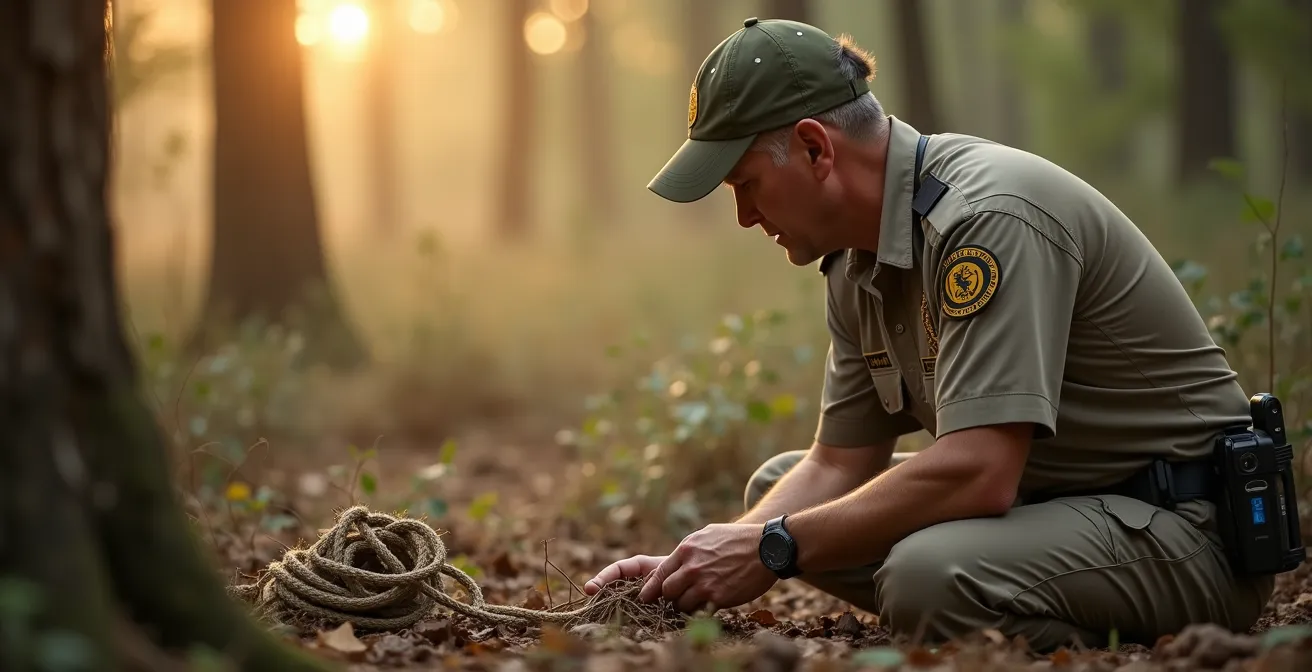
Second, poaching devalues the very concept of legal hunting and can erode public support. It paints all hunters with the same negative brush, creating political pressure that can threaten hunting traditions. The poacher is not a hunter; they are a thief who steals wildlife from the public trust, steals opportunity from legal hunters, and steals funding from the conservation programs that benefit all citizens. Fighting poaching isn’t just about punishing criminals; it’s about protecting the economic foundation of North American conservation and ensuring that the fees paid by law-abiding hunters continue to fund the science that sustains our wildlife populations.
Wolf Reintroduction: How It Impacts Elk Herds and Hunter Success?
The reintroduction of large predators like wolves into ecosystems where they were once extirpated adds a significant layer of complexity to wildlife management. For hunters, the primary question is often: how does this affect the elk, deer, or moose I hunt? The dynamic between predators, prey, and human hunters is a classic area of study in population ecology, and the data from places like the Yellowstone ecosystem provides fascinating, and sometimes surprising, insights. A common fear is that wolves will decimate prey populations, drastically reducing hunter opportunity. The reality is more nuanced.
While wolves are highly efficient predators, their impact must be viewed in the context of all sources of mortality. In the Yellowstone ecosystem, a landmark study tracking populations after wolf reintroduction found that human hunters were still the single largest source of elk mortality. Looking at the combined data, from 1995 to 2011, elk kills totaled 16,700 by humans versus 9,100 by wolves. Predators and hunters are both removing animals, and managers must account for both in their models. The introduction of a new predator means that the number of animals that can be sustainably harvested by humans must be adjusted downwards to account for this new source of “additive mortality.”
However, the most interesting science is emerging around how predators change the system. One popular theory, the “landscape of fear,” suggested that the mere presence of wolves would change elk behavior, causing them to avoid certain areas and allowing vegetation like aspen to recover. This would be a behavior-mediated trophic cascade. But recent, more comprehensive research has challenged this.
Case Study: Density vs. Behavior in Yellowstone
A 2024 study analyzing 19 years of data in Yellowstone found that wolf presence had minimal effect on elk browsing behavior. Instead, it was the combined predation from wolves, bears, cougars, *and* human hunters that collectively reduced the overall elk density. This reduction in the sheer number of elk was enough to allow aspen and willow to regenerate. This supports a density-mediated trophic cascade, meaning the ecosystem improved not because the elk were scared, but simply because there were fewer of them. This finding underscores that hunter harvest and natural predation can work as complementary forces in regulating prey density to achieve ecosystem-level benefits.
Key Takeaways
- Harvest quotas are a scientific tool to prevent habitat destruction caused by overpopulation, not just a limit on hunters.
- Accurate harvest reporting by hunters provides the essential data for adaptive management, allowing biologists to fine-tune quotas for population health.
- Regulated hunting is the primary funding source for wildlife conservation in North America, with license fees and excise taxes supporting both game and non-game species.
How Hunters and Anglers Contribute More to Biodiversity Than Non-Consumptive Users?
In the public discourse around conservation, a common narrative emerges that pits “consumptive” users like hunters and anglers against “non-consumptive” users like hikers and birdwatchers. The assumption is often that those who do not harvest wildlife are purer conservationists. From a scientific and financial standpoint, this narrative is demonstrably false. While non-consumptive users value wildlife, it is the consumptive users who have overwhelmingly funded and driven the restoration and management of wildlife in North America for over a century.
The financial contribution is staggering. Beyond license fees, the excise taxes established by the Pittman-Robertson Act (for hunting) and the Dingell-Johnson Act (for fishing) have created a self-sustaining funding cycle. These taxes on equipment are collected at the federal level and redistributed to state wildlife agencies specifically for habitat acquisition, scientific research, and wildlife restoration projects. This model ensures that the participants who benefit most from the resource are the ones paying for its upkeep. The economic impact is immense, as a comprehensive analysis shows that annually, hunting activities generate an annual $86.9 billion total economic impact, a significant portion of which is funneled back into conservation.

Crucially, this funding benefits far more than just game species. When a state agency uses Pittman-Robertson funds to purchase and restore a wetland for waterfowl, that project creates a thriving ecosystem for hundreds of non-game species, from songbirds and amphibians to pollinators. This is the great, untold story of hunter-funded conservation: the pursuit of game has been the single most effective driver of biodiversity conservation on the continent.
The Pittman-Robertson Act: A Legacy of Broad-Scale Conservation
Since its inception in 1937, the Pittman-Robertson Act has become the cornerstone of wildlife conservation in the United States. By directing excise taxes on firearms and ammunition to state wildlife agencies, it has generated over $11 billion for conservation. These funds have been used to reintroduce species like the white-tailed deer, wild turkey, and wood duck to vast portions of their former range from which they had been eliminated. More importantly, the millions of acres of habitat purchased and restored with these funds now support countless non-game species, proving that a model funded by hunters can be the most effective mechanism for preserving entire ecosystems.
Embrace your critical role as a frontline data collector and conservation funder. By diligently participating in harvest reporting, adhering to selective harvest guidelines, and supporting the science-based agencies that make sustainable hunting possible, you are actively investing in the future of wildlife for generations to come.