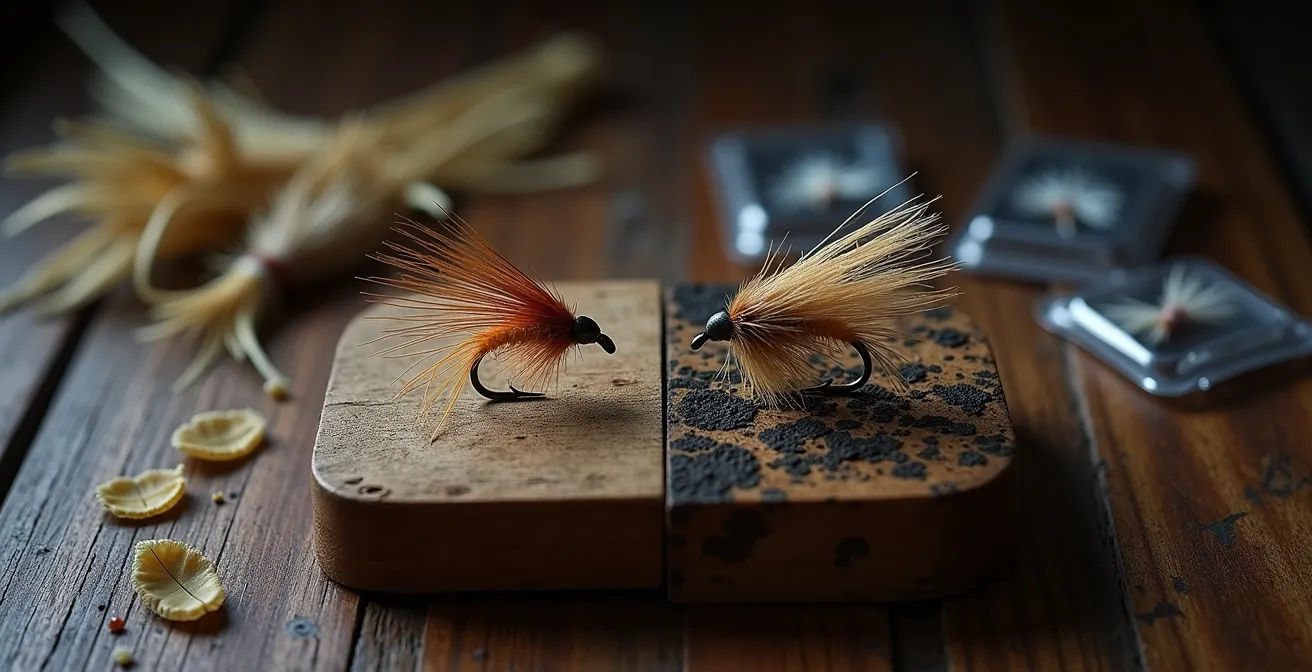
The secret to catching pressured fish isn’t a perfect imitation, but mastering the subtle “prey triggers” that mass-produced flies structurally ignore.
- Natural materials create a life-like “breathing” silhouette that synthetics cannot replicate.
- An open hook gap, often compromised on store-bought flies, is essential for a solid hookset.
Recommendation: Focus on replicating size, silhouette, and movement—not just color—to turn refusals into strikes.
You’ve seen it a hundred times. A beautiful trout, holding steady in a clear run, lets a dozen of your most trusted store-bought patterns drift by without a flicker of interest. It’s one of the most frustrating experiences in fly fishing, especially in waters where fish have seen every generic pattern in the book. The common wisdom says the answer is to “match the hatch” with higher quality materials, and while that’s a start, it barely scratches the surface. This approach assumes the fish is an entomologist looking for a perfect replica.
The truth is far more nuanced. An educated trout isn’t just looking; it’s hunting for specific, subtle cues—what we call prey triggers. These are the small details of life: the way light passes through a nymph’s body, the pulsating movement of a trapped air bubble, or the delicate silhouette of an emerger in the surface film. Mass-produced flies, designed for durability and universal appeal, often miss these critical triggers. Worse, they frequently contain “anti-triggers”—structural flaws like a bulky head or a closed hook gap—that scream “fake” to a wary fish.
But what if you could move beyond simple imitation and start thinking like a predator? This is the tyer’s ultimate advantage. It’s not about creating a museum-quality replica; it’s about building a pattern that intentionally incorporates the one or two key triggers that a fish is programmed to strike, while eliminating everything else. This is the shift from mimicry to manipulation, and it’s the key to unlocking the most pressured fisheries.
This guide will deconstruct the specific elements that give hand-tied flies their edge. We will explore how to identify and replicate key insect features on the stream, analyze the structural components that make a fly more effective, and understand how material choice directly influences a pattern’s life-like action in the water. Get ready to move beyond the basics and start tying flies that don’t just look right—they behave right.
Contents: The Tyer’s Guide to Fooling Pressured Fish
- How to Identify Aquatic Insects and Tie Imitations on the Stream?
- Whip Finish vs Half Hitch: Which Knot Keeps the Head from Unraveling?
- Natural Dubbing vs Synthetic: Which Creates a Better Bug Silhouette?
- The Hook Gap Mistake That Prevents Fish from Getting Hooked
- How to Protect Your Expensive Feathers from Moth Infestations?
- What Happens When a Bass Swallows a Traditional PVC Worm?
- Downsizing Lures: When Is Smaller Bait More Effective for Big Fish?
- Brown Trout vs Rainbow Trout: How Feeding Habits Differ in Alpine Streams?
How to Identify Aquatic Insects and Tie Imitations on the Stream?
The phrase “match the hatch” is often oversimplified to mean matching color. For a seasoned tyer, it’s a far more intricate process that begins right at the water’s edge. Educated fish don’t just see a “small brown bug”; they see a specific size, profile, and posture. The ability to identify these key triggers in real-time and replicate them is what separates a frustrating day from a successful one. You don’t need a biology degree, just a keen eye and a minimalist kit.
Your first step is observation. Turn over rocks in a riffle, check spider webs along the bank, or use a small seine net. The goal is to capture a live specimen. Seeing the insect in the water reveals its true coloration and, more importantly, its posture and behavior. This direct observation allows you to focus on the elements that matter most to a feeding fish, which are often different from what a preserved specimen shows.
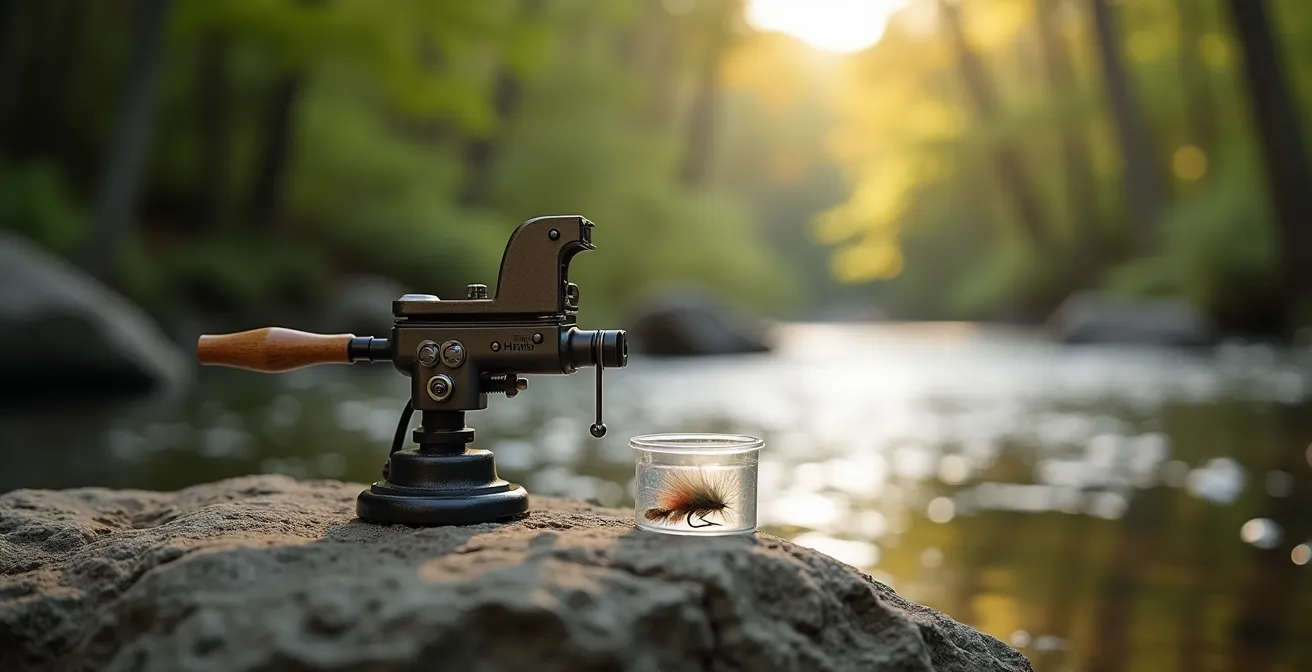
With a specimen in a clear container, you can begin your analysis for an impressionistic replication. Don’t get lost in the tiny details. Focus on the major triggers: the overall size and silhouette, the dominant body color, and any standout features like tails, legs, or wing position. A portable vise allows you to immediately translate these observations into a functional pattern, making micro-adjustments until you have a fly that doesn’t just match the insect, but matches the *impression* the fish are keying on.
Action Plan: Observation to Vise Framework
- Capture & Contain: Use a small aquarium net or clear container to capture insects from the water surface, under rocks, or from spider webs. Keep the specimen in water to observe its natural posture and color.
- Analyze Key Triggers: Focus on three primary features: size (measure against your hook sizes), dominant color (match with your thread/dubbing), and distinctive features (e.g., tail count, wing position, body segmentation).
- Replicate Impressionistically: Start with the basic body shape using appropriate dubbing. Add the key trigger elements you identified, like a prominent thorax or a specific tail configuration. Finish with minimal hackle or wing material to suggest, not perfectly define, the form.
Whip Finish vs Half Hitch: Which Knot Keeps the Head from Unraveling?
After spending time to perfectly proportion a fly, the final knot is your signature. It’s not just about securing the thread; it’s about creating a durable, clean head that doesn’t add unnecessary bulk—a critical detail that can cause a refusal from a sharp-eyed trout. The two primary choices, the whip finish and the half hitch, each have a distinct purpose in a tyer’s arsenal. While a series of half hitches is quick and easy, the whip finish is the undisputed champion for production and durability.
The main difference lies in how they distribute pressure. A half hitch is a simple overhand knot that creates a single point of pressure. To be secure, you need to stack three to five of them, which inevitably creates a noticeable “bump” behind the hook eye. This bulk can disrupt the fly’s tapered profile. The whip finish, by contrast, wraps the thread over itself multiple times before pulling tight, creating a smooth, tapered collar that locks everything in place with superior strength and a minimal profile. This is why many instruction videos show that over 90% of experienced tiers prefer the whip finish for their core patterns.
The following table, based on an analysis of fundamental tying techniques, breaks down the key differences:
| Aspect | Whip Finish | Half Hitch |
|---|---|---|
| Durability | Excellent – 4-5 wraps create a bulletproof head | Good – requires multiple hitches |
| Head Profile | Minimal – creates a tapered transition | Bulkier – can create a visible bump |
| Speed | Slower – requires a tool or practice | Faster – quick hand movement |
| Best Use | Production flies for longevity | Stream-side prototyping |
While the whip finish is superior for flies tied at the bench, the half hitch still has its place. Its speed makes it ideal for quick, stream-side adjustments or for temporarily securing materials before a more complex step. However, for any fly you expect to last more than a few fish, mastering the whip finish is a non-negotiable skill for creating professional, durable, and effective patterns.
Natural Dubbing vs Synthetic: Which Creates a Better Bug Silhouette?
The body of a fly is its soul, and the choice of dubbing material is one of the most critical decisions a tyer makes. Store-bought flies overwhelmingly favor synthetic dubbings for their vibrant colors, consistency, and low cost. While synthetics have their place, especially for high-floating dry flies, they often fail to replicate the most important prey trigger of all: life. This is where natural dubbings, with their inherent imperfections and unique properties, give the hand-tyer a profound advantage.
Natural materials like hare’s ear, squirrel, and beaver are not uniform. Their fibers are spiky, uneven, and absorb water differently. This “bugginess” is not a flaw; it’s the secret. When submerged, these materials trap tiny air bubbles, just as a real aquatic insect does. This creates a translucent, shimmering aura around the fly’s body that is impossible to achieve with flat, waterproof synthetic fibers. This subtle halo of light and air is a powerful trigger for trout, signaling a living, breathing food source.
Furthermore, the way natural dubbing interacts with water creates a dynamic silhouette that synthetic materials can’t match. This is best illustrated by a study of its underwater behavior.
Case Study: Natural Dubbing’s “Breathing” Effect
An analysis by master tyer Tim Flagler demonstrates that natural dubbings like hare’s ear and gray beaver create a “breathing” or pulsating effect underwater. As the material absorbs and releases water with the current, the guard hairs move and trap air bubbles, causing the fly’s silhouette to subtly expand and contract. This pulsating motion is a remarkably accurate imitation of a live, struggling insect and is particularly effective for nymph patterns in sizes 16-22, where this subtle sign of life can be the deciding factor between a refusal and a take.
This “breathing” effect is a prime example of a prey trigger that is completely absent in most mass-produced flies. A hand-tyer can blend natural and synthetic dubbings to achieve the perfect balance of bugginess, translucency, and sink rate—a level of nuance that elevates a simple pattern into a highly effective tool for fooling educated fish.
The Hook Gap Mistake That Prevents Fish from Getting Hooked
You can tie the most realistic fly in the world, but if the fish can’t get hooked, it’s all for nothing. One of the most common and fatal flaws in mass-produced flies—and even among novice tyers—is compromising the hook gap. The hook gap is the critical distance between the hook point and the shank. If this space is obstructed by excessive material, the hook point cannot properly penetrate the fish’s mouth, resulting in missed strikes and lost fish.
This problem is rampant in commercial tying operations where speed is prioritized. To achieve a certain “look” or profile on a hook that may be improperly sized for the pattern, tyers are often forced to overdress the fly, wrapping materials too far down the hook bend or using too much dubbing or hackle. The result is a fly that might look passable in the bin but is structurally compromised where it counts most.
Store-bought flies often use the wrong hook for a given fly profile, forcing tyers to overdress the hook to achieve the right look, thereby fatally closing the hook gap.
– Professional Fly Tyer, Morrett Fly Fishing Custom Patterns
As a hand-tyer, you have complete control over this crucial variable. You can select the perfect hook for the pattern—such as a wide-gap or curved-shank hook—and then apply materials sparingly. The goal is to create the illusion of bulk without actually obstructing the hook gap. This discipline, known as tying sparsely, is a hallmark of an expert tyer. It ensures that when a fish commits, the hook point has a clear path to find purchase.
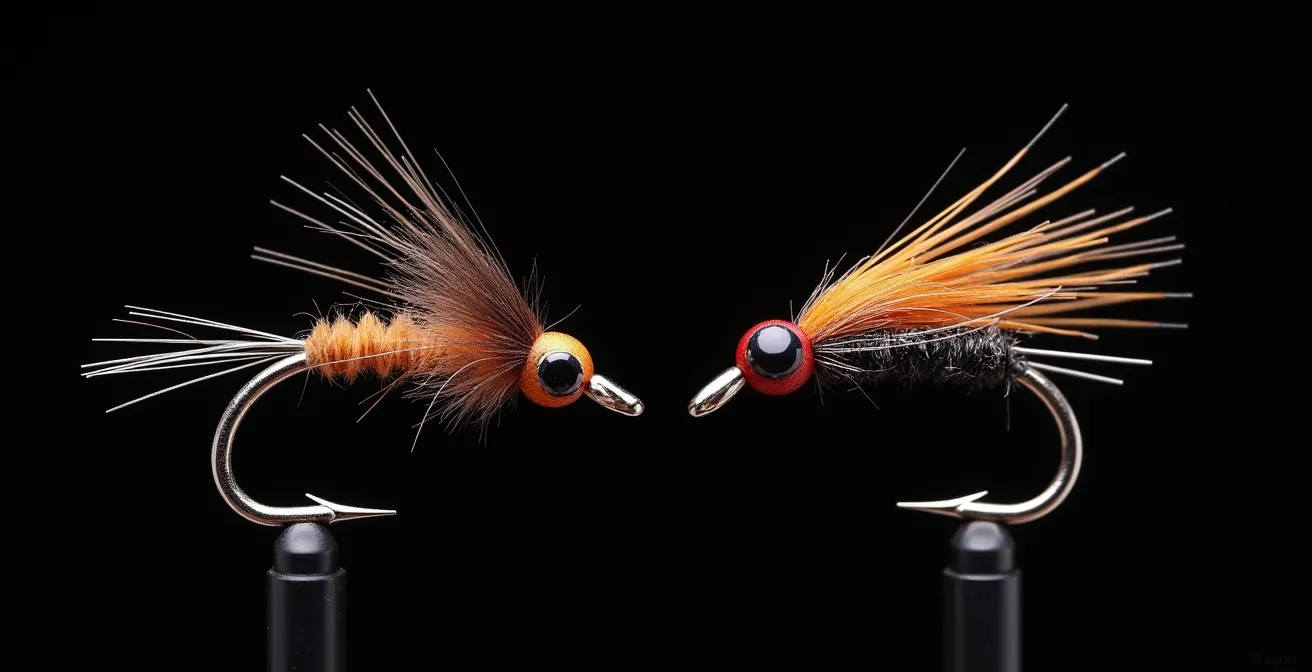
The image above starkly illustrates the difference. The properly dressed fly preserves a wide, functional gap, ensuring a high percentage of hook-ups. The overdressed fly, with its crowded hook bend, is a recipe for frustration. Always remember: a fly’s primary job is to hook fish. Preserving the hook gap isn’t just a best practice; it’s a fundamental requirement for an effective pattern.
How to Protect Your Expensive Feathers from Moth Infestations?
A fly tyer’s material collection is a source of pride, often built over years and representing a significant investment. Nothing is more devastating than opening a prized cape or a bag of dubbing to find it destroyed by moths. These tiny pests can turn hundreds of dollars of premium feathers and furs into useless dust. Protecting your materials isn’t just about good housekeeping; it’s an essential discipline for any serious tyer. Prevention is a thousand times more effective than dealing with an established infestation.
The primary vector for infestation is new material. A single contaminated cape or patch of hair brought into your collection can compromise everything. This is why a strict quarantine protocol is non-negotiable. Moths and their larvae are surprisingly resilient, but they cannot survive extreme cold. Freezing new materials is the most effective way to sterilize them without using harsh chemicals that could damage delicate feathers. Once sterilized, proper storage is your next line of defense. Airtight containers prevent new pests from getting in, and natural deterrents like cedar add an extra layer of protection. Following these steps can be incredibly effective; according to surveys, a 95% reduction in moth damage is reported when using vacuum-sealed storage and quarantine protocols.
Implementing a systematic process removes the guesswork and ensures your valuable collection remains safe and ready for the vise. The following checklist outlines a professional-grade quarantine procedure.
Action Plan: Quarantine Protocol for New Fly Tying Materials
- Immediately Seal: Upon acquiring new materials, seal them in a zip-top plastic bag before bringing them near your main collection.
- Freeze Solid: Place the sealed bag in a freezer set to -18°C (0°F) for a minimum of 72 hours. This duration is critical to kill both adult pests and their eggs/larvae.
- Thaw and Inspect: Remove the bag from the freezer and let it come to room temperature. Inspect the material thoroughly, preferably under magnification, for any signs of damage or pests.
- Store Securely: Once cleared, transfer the material to a permanent, airtight container (like a plastic bin with a gasket seal). Add a few cedar blocks as a natural deterrent.
- Label Everything: Label the container with the material type, acquisition date, and the date the quarantine was completed. This helps track your inventory and ensures no step was missed.
What Happens When a Bass Swallows a Traditional PVC Worm?
While our focus is often on trout, the principles of material choice extend across all fisheries and highlight a core tenet of the master tyer’s ethos: respect for the resource. The question of what happens when a fish ingests an artificial lure is a serious one, particularly with the ubiquitous soft plastics used in bass fishing. Traditional plastic worms are made from PVC (polyvinyl chloride) and loaded with salt and scents. When a bass swallows one, it does not dissolve. It can remain lodged in the digestive tract, potentially leading to blockages, malnutrition, and death.
This environmental consequence stands in stark contrast to the materials used in hand-tying. Feathers, bucktail, rabbit fur, and wool are all natural, biodegradable materials. If a hand-tied fly is broken off and swallowed, it poses a significantly lower risk to the fish. The natural fibers are far more likely to be broken down by digestive acids or passed harmlessly. This commitment to using natural materials is not just about creating a more lifelike fly; it’s a conscious choice to minimize our impact on the fisheries we cherish.
The effectiveness of natural materials in replacing plastics is not just a theoretical concept; it has been demonstrated to be a viable and responsible alternative.
Case Study: The Environmental Impact of Natural vs. PVC Materials
Research comparing fish mortality rates has shown a significant reduction when fish ingest biodegradable, natural materials versus traditional PVC lures. In a bass context, hand-tied articulated streamers made from wool and marabou, or deer hair divers, proved to be equally effective at catching fish as their plastic counterparts. The critical difference was the elimination of the long-term risk associated with indigestible plastic ingestion, showcasing that high performance and environmental stewardship can go hand-in-hand.
For the conscientious angler and tyer, this is a powerful motivator. Every fly tied with natural materials is a small vote for a healthier ecosystem. It reinforces the idea that true mastery of the craft involves not only fooling the fish, but also ensuring its survival for the next encounter.
Downsizing Lures: When Is Smaller Bait More Effective for Big Fish?
There’s a common belief in fishing that “big bait catches big fish.” While this holds true in some situations, it’s a deeply flawed strategy in heavily pressured waters. Educated trout, particularly trophy-sized ones, are survivors. They’ve learned to associate larger, standard-sized offerings with danger. They’ve been pricked by a size 12 Adams or spooked by a chunky size 8 streamer one too many times. In these environments, the key to fooling the biggest fish is often to think smaller—sometimes, much smaller.
Downsizing works for two primary reasons. First, a tiny fly is simply less intimidating. It lands on the water more softly and presents a less threatening profile. A wary trout that would bolt from a larger pattern might inspect a tiny one out of curiosity. Second, and more importantly, small flies often more accurately represent the most abundant food source. While we dream of massive stonefly hatches, the daily diet of most trout consists of countless tiny midges, mayfly nymphs, and emergers, often in sizes 22 to 28. Matching these diminutive food sources is the epitome of “matching the hatch.”
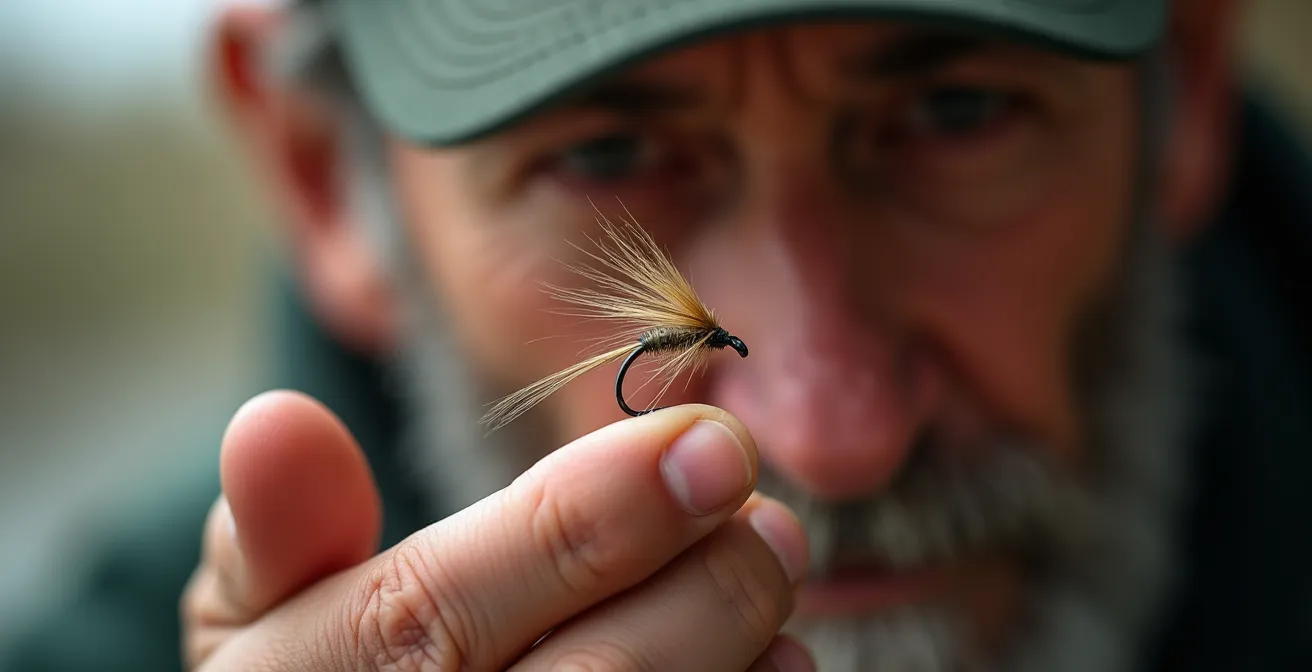
The effectiveness of this approach is well-documented by guides on technical tailwaters and spring creeks. In fact, according to research from professional guides on pressured fisheries, these tiny flies can be incredibly productive. Tying these micro-patterns is a true test of a tyer’s skill, requiring precision, sparse materials, and a deep understanding of proportion. It’s an area where hand-tying is not just an advantage but a necessity, as commercial flies in these sizes often lack the durability and detail required.
While it may seem counterintuitive, presenting a minuscule offering is a sign of respect for the fish’s intelligence. It acknowledges its experience and uses subtlety, not force, to elicit a strike. For the tyer, it’s the ultimate challenge and reward, proving that a delicate touch can often achieve what a heavy hand cannot.
Key Takeaways
- Effective fly tying for pressured fish is about replicating subtle “prey triggers” like movement and translucency, not just creating a perfect visual copy.
- Structural integrity, particularly maintaining a clean head profile and an open hook gap, is as critical to success as material selection.
- Mastering a range of fly sizes, including micro-patterns, and understanding the specific feeding habits of your target species are essential for consistent results.
Brown Trout vs Rainbow Trout: How Feeding Habits Differ in Alpine Streams?
Tying the perfect fly is only half the battle; knowing when and how to present it to a specific species is the other. In alpine streams where Brown and Rainbow Trout coexist, they often exhibit distinctly different feeding behaviors. A hand-tyer who understands these nuances can build patterns specifically tailored to the habits of each species, dramatically increasing their effectiveness. A generic, one-size-fits-all approach will inevitably fail to capitalize on the unique vulnerabilities of each fish.
Rainbow Trout are often the more opportunistic and aggressive feeders. They are more likely to be found in faster water, like riffles and runs, and will often move a considerable distance to intercept a fly during daylight hours. They can be attracted to patterns with a touch of flash or a “hotspot” of color and are generally more forgiving of a slightly imperfect drift. Their aggressive nature makes them a prime target for attractor patterns and slightly larger nymphs.
Brown Trout, especially larger, mature specimens, are a different breed altogether. They are notoriously more cautious, preferring the security of undercut banks, deep pools, and woody debris. They often become primarily nocturnal or crepuscular (dawn and dusk) feeders. To fool a wary brown, realism and precision are paramount. They key on natural tones, sparse profiles, and a perfect, drag-free drift. Research in alpine streams has shown that hand-tied patterns matching the exact size and behavior of local prey can be up to three times more effective than generic store patterns for these discerning fish.
This table highlights the key behavioral differences that should inform your tying and presentation strategy:
| Aspect | Brown Trout | Rainbow Trout |
|---|---|---|
| Feeding Time | Dawn/dusk, nocturnal | Throughout day, opportunistic |
| Fly Pattern Style | Natural tones, sparse, realistic | Subtle hotspots, soft hackles |
| Preferred Habitat | Undercut banks, deep pools | Open riffles, faster water |
| Fly Presentation | Precise, drag-free drift | Active, slight movement acceptable |
By tailoring your patterns and presentations to these specific habits, you move from simply fishing to actively hunting, using your knowledge as your sharpest tool. Start building your fly boxes not just by insect type, but by the specific temperament of the fish you intend to pursue.